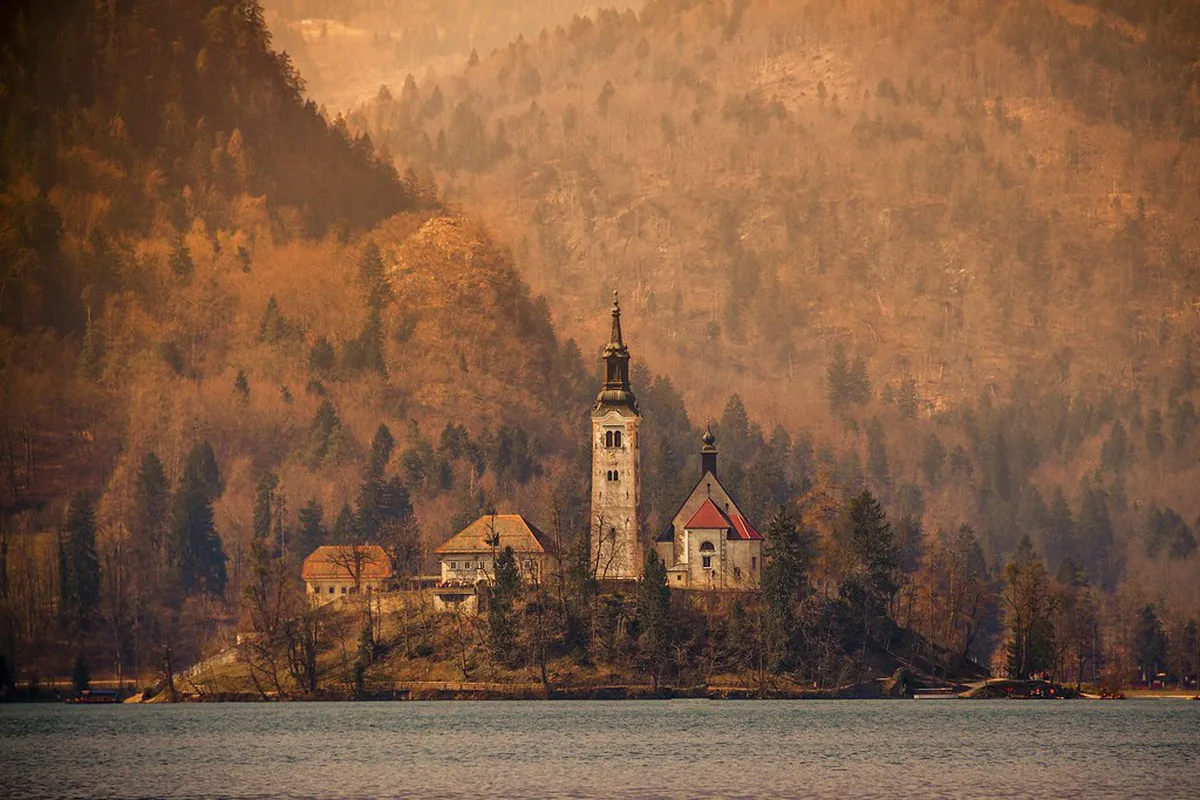
Blejski otok — Bled Island — is the only natural island in Slovenia. It sits near the western end of Lake Bled, roughly 300 metres from the nearest shore, and has been a place of spiritual significance since at least the Bronze Age. Today it draws visitors for its baroque church, its tradition of the wishing bell, and the experience of arriving by pletna — the flat-bottomed wooden gondola that has served the island for centuries. This guide covers everything you need for a visit in 2026.
History and Legend of the Island
The island's documented Christian history begins in the 9th century, but excavations have found traces of a Slavic temple and pre-Slavic Bronze Age settlement beneath the current church floor. The medieval church was rebuilt and expanded several times; the current baroque exterior dates largely from a major renovation completed in 1698, while the bell tower was added in the early 18th century. Fragments of late Gothic frescoes from the 15th century survive on the interior walls.
The island's most famous legend involves the sunken bell. According to the story, a grieving widow had a bell cast in memory of her murdered husband, but as it was being transported to the island by boat, a storm arose and the bell was lost in the lake. The widow joined a convent in Rome and reportedly never returned. The church's current bell — cast in 1534 — is said to carry the power of granting wishes to those who ring it. Divers have periodically searched the lake floor for the legendary sunken bell without success, which has only deepened the story's hold on local imagination.
How to Get to Bled Island: The Pletna Boat
The traditional and most atmospheric way to reach the island is by pletna — a flat-bottomed wooden gondola distinctive to Lake Bled. Pletna boats are rowed standing by a single oarsman using long wooden oars, a technique requiring considerable skill given the boat's flat hull and the lake's variable surface conditions. The right to operate a pletna was historically tied to specific families and passed from father to son; this system remains partially in place today.
Return fare is approximately €18 per person in 2026. The crossing takes about 15 minutes each way. Pletna boats depart from several jetties around the lake: the main departure points are near the Grand Hotel Toplice on the northern shore, near the rowing centre on the southern shore, and from the western shore near Camping Bled. Boats run from April through October; service is suspended from December through March.
Boats run on demand rather than to a fixed timetable. In high season (July–August), you may wait 20–30 minutes at the busiest jetties. Jetties on the western shore near the camping area tend to have shorter queues than the main northern shore departure point. Once on the island, you have approximately 30–45 minutes before the next boat collects your group; there is no strict time limit but the oarsman will signal when it is time to return.
Self-Guided Rowboat Option
If you want to reach the island on your own schedule and at your own pace, rowing boats are available for hire from several points around the lake. Rental is approximately €15–20 per hour for a four-person boat. You can row to the island, tie up at the jetty alongside the pletna boats, and explore at your own pace before rowing back. This option costs less than the pletna if you are in a group and gives you complete flexibility over timing.
Rowing time from the main beach to the island is about 20–25 minutes for a reasonably fit rower. The lake surface is generally calm in the morning; afternoon winds from the northwest can make rowing harder on the return journey.
Can You Swim to Bled Island?
💡 Pro Tip: Book your Bled adventures in advance through Viator for the best deals!
Swimming to Bled Island is permitted and practiced. The shortest crossing — from the southwestern shore near Camping Bled — is approximately 300 metres. The water temperature at peak summer reaches 22–24°C, cold by Mediterranean standards but bearable for a short open-water swim. The swim typically takes around 10 minutes at a relaxed pace for a competent adult swimmer and does not require open-water experience.
If you swim to the island you can land at the jetty and visit the church. There are no restrictions on swimmers arriving independently, though you will still need to pay the island entry fee if applicable. Changing facilities and lockers are available at the main swimming area on the western shore near Camping Bled — store your dry clothes and valuables there before entering the water, or bring your valuables in a waterproof dry bag if you prefer to keep them with you. Note that the lake is deeper than it looks — maximum depth is 30 metres — and the water is fed by cold springs, so the temperature can drop quickly below the surface layer. A wetsuit is not necessary in July or August but is worth considering in June or September when the surface layer is cooler.
The practical consideration most swimmers overlook is the return journey. After visiting the church, exploring the island, and climbing back down the 99 steps, most swimmers find a pletna boat for the return — a sensible combination that means you arrive under your own power and return in comfort. The oarsmen are accustomed to swimmers boarding at the island jetty; simply ask before departure and pay the one-way fare (approximately €9, half the return ticket price).
The 99 Steps
From the island's landing jetty, a paved path leads to the base of the staircase: 99 stone steps rising about 12 metres to the church entrance. The steps are uneven and worn smooth by centuries of foot traffic; they are not technically demanding but require care in wet conditions. Most visitors in reasonable health complete the climb in about 3–4 minutes.
The number 99 carries significance beyond the physical count. Local tradition holds that a groom who carries his bride up all 99 steps without setting her down will be blessed with a long and happy marriage — a display of strength and dedication before the wedding ceremony in the church. This tradition is taken seriously at Bled weddings; the Church of the Assumption remains a popular wedding venue, and the sight of a groom making the climb in wedding attire is common in summer. The groom cannot pause or put the bride down at any point — touching down on the steps, even briefly, is considered to break the ritual.
The tradition has been recognised as part of Slovenia's intangible cultural heritage, and UNESCO has acknowledged the wider context of Bled's living traditions connected to the island. Weddings are held at the church throughout the summer season; if you visit on a Saturday morning between June and September, there is a reasonable chance you will witness the step-carrying tradition in person. Guests line the staircase on both sides and the moment is, by most accounts, genuinely moving — equal parts athletic feat and symbolic act.
The Wishing Bell
Inside the church, a rope hangs from the ceiling of the bell tower, connected to the church's bronze bell cast in 1534. The tradition is simple: pull the rope three times and make a wish. The bell's tone can be heard across the lake. Whether the wish is granted depends, according to local belief, on the sincerity with which the bell is rung.
The bell's connection to legend runs deeper than the wishing ritual. The legend of the sunken bell tells of a widow whose husband was murdered; she had a memorial bell cast and ordered it transported to the island church by boat. A violent storm arose on the crossing, the boat capsized, and the bell sank to the bottom of the lake. Stricken with grief, the widow left for Rome and entered a convent, reportedly praying for the lost bell for the rest of her life. The Pope, moved by her devotion, arranged for a new bell to be cast and sent to Bled — this became the 1534 bell now housed in the tower. The original sunken bell has never been recovered. Divers have explored the lake floor repeatedly over the centuries; the lake's maximum depth is 30 metres and its cold, clear water preserves objects well, but the bell remains unfound, which has only reinforced its legendary status.
The wishing bell is the single most sought-after experience on the island. In high season, the queue to ring it can stretch back through the church nave. If you arrive by the first pletna boats of the morning (before 9am), you may have the bell essentially to yourself. The sound of the bell ringing across the still lake at dawn, with the Alps lit by early light, is one of Bled's most memorable sensory experiences.
The Church of the Assumption: What to See Inside
The church interior is intimate — the nave seats only a few dozen people — and worth spending 15–20 minutes exploring. Key features include:
- Gothic frescoes (15th century): Partially preserved fragments on the walls and in the side chapel, depicting scenes from the life of the Virgin Mary. The best-preserved section is in the apse behind the altar.
- Baroque main altar: An ornate wooden structure housing a gilded figure of the Virgin Mary, the island's primary devotional image for centuries.
- Votive offerings: The walls are lined with small plaques and offerings left by pilgrims and visitors over the decades — a tangible record of the church's continuing spiritual significance.
- Bell tower: The tower houses the wishing bell and also contains a small exhibition about the island's history. Climbing to the top of the tower is possible and gives views over the church roof toward the lake.
How Long to Spend on the Island
💡 Pro Tip: Book your Bled adventures in advance through Viator for the best deals!
Most visitors spend between 30 and 45 minutes on the island — enough time to climb the steps, explore the church, ring the bell, and take photographs from the top of the staircase before the return pletna. If you are genuinely interested in the frescoes and church history, 60 minutes gives a more relaxed visit. The island's café serves coffee and light snacks; combining a coffee stop with the church visit is a pleasant way to extend your time if you have flexibility on the return boat.
Practical Information for 2026
- Pletna fare: ~€18 return per person
- Season: Pletna boats run April–October; island accessible year-round by rowboat or swimming
- Departure points: Northern shore (near Grand Hotel Toplice), southern shore (rowing centre), western shore (Camping Bled)
- Waiting times: 20–30 min at main jetty in July–August; western shore jetty usually shorter
- Time on island: Plan 30–60 minutes
- Stairs: 99 steps; no lift or wheelchair access
- Church dress code: Shoulders and knees covered; scarves available at the entrance
- Photography: Permitted inside the church; no flash during services
- Best time: First boats of the morning (before 9am) for fewest crowds