Lake Bled sits in one of the most geographically rich corners of Central Europe. Within two hours by car, you can be in a capital city, beside a wilder alpine lake, inside one of Europe's largest cave systems, or looking out over the Adriatic. This guide covers the five best day trips from Lake Bled, with distances, drive times, and specific guidance on what to do at each destination.
1. Ljubljana — 55km, 1 Hour by Car
Slovenia's capital is the most obvious and most rewarding day trip from Bled. Ljubljana (pronounced "lyoo-BLEE-ah-nah") is a compact, walkable city of around 300,000 people, built along both banks of the Ljubljanica River. It has the density of a proper European capital without the exhausting scale — the main sights are reachable on foot from the central pedestrian zone, and the city rewards a day of wandering without an itinerary.
What to Do in Ljubljana
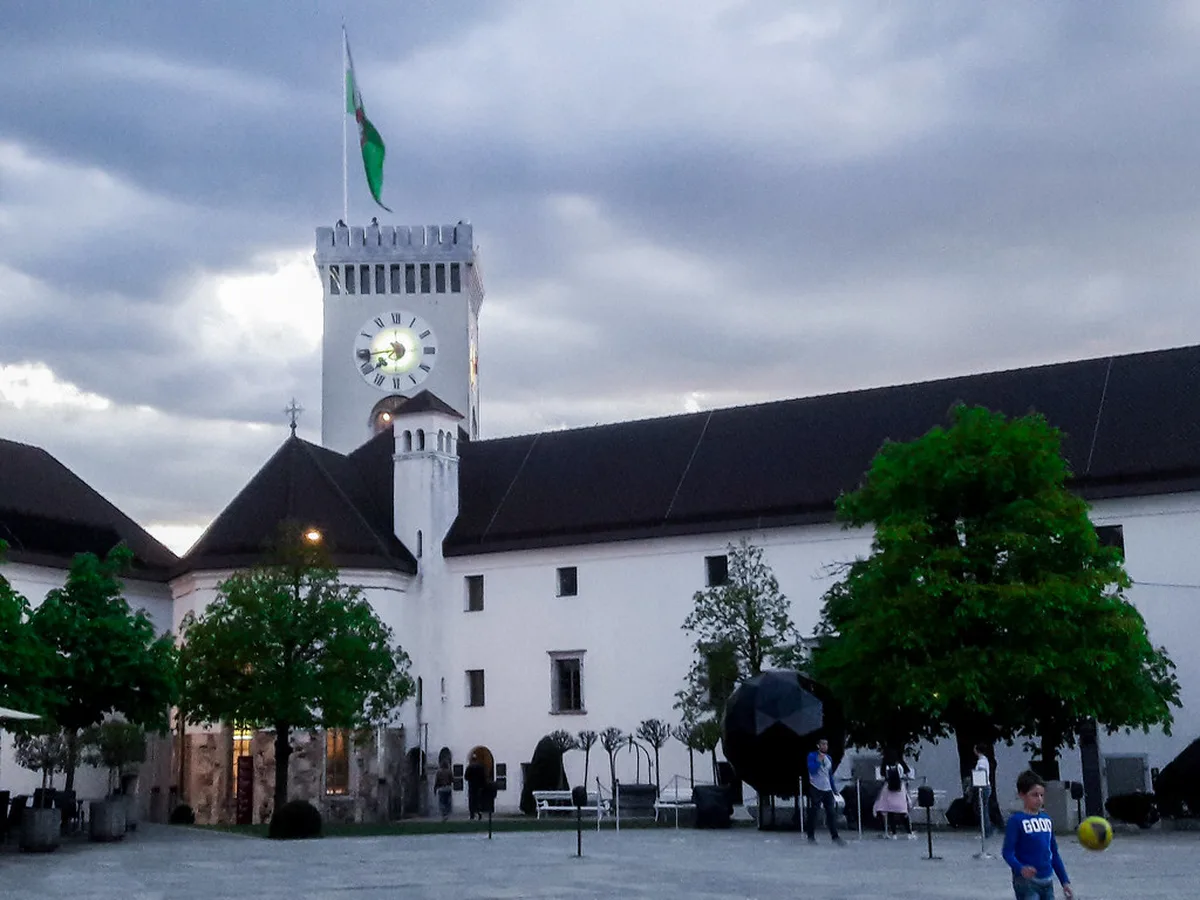
- Ljubljana Castle: The hilltop fortress above the old town is accessible by funicular or on foot in 15 minutes. The views over the red-tiled rooftops of the old town are worth the trip alone. The castle museum focuses on Slovenian history and has an excellent virtual reality installation reconstructing the medieval city.
- The Old Town: The riverside promenade below the castle, lined with outdoor cafés and baroque facades, is Ljubljana's social and visual heart. Architect Jože Plečnik redesigned much of the city in the 1920s and 1930s; look for his signature colonnaded market, the Triple Bridge, and the covered market hall on the river.
- Dragon Bridge: Plečnik's 1901 Dragon Bridge, named for the four bronze dragons on its pillars, is Ljubljana's most photographed structure and the subject of a local legend that dragons will wag their tails for virgins who cross — locals note this has never been observed.
- Central Market: The covered market along the Ljubljanica River operates every morning except Sunday. The outdoor section specialises in local produce; the indoor hall in the arcade sells cheese, cured meats, honey, and bread. Arrive before noon for the best selection.
- Metelkova: A former Yugoslav military barracks converted into an alternative arts and culture complex. More interesting to look at than to experience in the day, but a distinctive Ljubljana landmark.
Getting there: From Bled, the drive to Ljubljana takes about 1 hour via the A2 motorway. Flixbus and local APT buses connect Bled and Ljubljana in 90 minutes; buses run roughly hourly. There is no direct train from Bled village; from Lesce-Bled station, trains reach Ljubljana in 1 hour 10 minutes.
Recommended time: 5–7 hours. Ljubljana is entirely manageable as a day trip and does not require an overnight stay unless you want evening restaurant and nightlife options.
2. Lake Bohinj — 26km, 35 Minutes by Car
Lake Bohinj (Bohinjsko jezero) is the other glacial lake in Triglav National Park — larger than Bled (4.2km long versus 2km), wilder, quieter, and with no island or castle to anchor the attention. What it has instead is the most authentic alpine lake experience in Slovenia: clear cold water, dense forest, dramatic peaks, and the sense that the landscape has not been polished for tourism. It is the better choice for serious hiking, open swimming, and escaping Bled's crowds.
What to Do at Lake Bohinj
- Swimming: Bohinj is Slovenia's best lake for wild swimming. The water is slightly warmer than Bled (shallower in the central section) and the lake's length means there are quiet swimming spots well away from the main tourist access point at Ribčev Laz. The eastern shore near the Church of St. John the Baptist is the main swimming beach.
- Hiking: The Bohinj valley is the gateway to the highest peaks of Triglav National Park. Day hikes from the lake shore reach mountain huts and viewpoints in 2–4 hours. The Savica Waterfall, at the western end of the lake, is a 90-minute walk from the main parking area and drops 78 metres into a narrow gorge.
- Vogel cable car: From the southern shore, a cable car climbs to 1,540 metres elevation on the Vogel mountain, giving panoramic views of Bohinj valley and the Triglav massif. The cable car runs year-round.
- Church of St. John the Baptist: A 14th-century church on the eastern shore with exterior Gothic frescoes and a remarkable interior — nearly every wall surface is covered in medieval paintings.
Getting there: From Bled, the drive to Lake Bohinj takes about 35 minutes via the Sava valley road. Local buses run between Bled and Bohinjska Bistrica (the nearest town) several times daily; add a local bus from there to the lake shore.
Recommended time: 4–6 hours for a relaxed visit including swimming and a waterfall walk; a full day if you plan a serious hike.
3. Kranjska Gora and the Vrsic Pass — 45km, 50 Minutes by Car
Kranjska Gora is Slovenia's principal ski resort town, in the far northwestern corner of the country where Slovenia, Austria, and Italy meet. In summer it transforms into a hiking and cycling base with one of the most scenic mountain roads in the Alps: the Vrsic Pass road, which climbs from 811 metres at the town to 1,611 metres at the pass summit through 50 numbered hairpin bends, then descends into the Soča Valley.
What to Do in Kranjska Gora and on Vrsic Pass
- Drive the Vrsic Pass road: The 24-kilometre road over the pass is the single best reason to make this day trip. The northern hairpin bends (numbered 1 to 26) are steep and narrow, built by Russian prisoners of war during World War I using gravel from the riverbed below. The Russian Chapel near hairpin 8 marks the site of an avalanche that buried dozens of workers in 1916. The southern descent into the Soča valley gives the first views of the emerald-green Soča River.
- Jasna Lake: A small artificial lake below Kranjska Gora village with a backdrop of the Martuljek glacier and the peaks of the Karavanke range. Popular for photography and a short lakeside walk.
- Triglav National Park hiking: Trails from Kranjska Gora reach the Tamar valley (1.5 hours return), a flat alpine valley surrounded by 2,000-metre walls. One of the most accessible serious alpine landscapes in Slovenia.
Getting there: By car from Bled takes 50 minutes via the A2 motorway and the Sava valley road. Buses run from Kranjska Gora to Bled but are infrequent; a car or taxi is more practical for this day trip.
Note: The Vrsic Pass road is open from May through October only; it is closed by snow in winter. The hairpin bends are suitable for standard cars but large vehicles struggle on the tightest corners.
4. Postojna Cave — 75km, 1 Hour by Car
💡 Pro Tip: Book your Bled adventures in advance through Viator for the best deals!
Postojna Cave (Postojnska jama) is one of the largest cave systems in Europe, with 24 kilometres of explored passages. Visitors travel the first 3.5 kilometres by electric train before continuing on foot through a sequence of chambers containing stalactites, stalagmites, and extraordinary rock formations accumulated over millions of years. The cave maintains a constant 10°C year-round — bring a layer even in summer.
What to Do at Postojna
- Cave tour: The standard guided tour lasts 1.5–2 hours including the train ride and a 1.5km walking section through the Concert Hall and White Hall. The cave is fully lit and the walking sections are paved and flat.
- Proteus anguinus: The cave is home to the olm (Proteus anguinus), a blind, cave-dwelling salamander that can live for 100 years and survive up to 10 years without food. It is found only in the karst cave systems of the western Balkans; Postojna's vivarium provides a guaranteed sighting.
- Predjama Castle: 10 kilometres from Postojna, a 16th-century castle built into the mouth of a cliff cave above a 123-metre rock face. It is one of the most dramatically positioned buildings in Europe and worth the detour even if you have already visited Bled Castle.
Getting there: From Bled, the drive to Postojna takes just over 1 hour via the A1 motorway. Direct buses run from Ljubljana to Postojna but not from Bled; a car is the practical option for this day trip. Tickets for Postojna Cave in 2026 are approximately €28 per adult; advance booking is strongly recommended in July and August.
5. Piran — 130km, 1 Hour 45 Minutes by Car
Piran is Slovenia's most beautiful coastal town, a Venetian-era settlement on a narrow promontory jutting into the Gulf of Trieste. Its medieval streets were built by the Venetian Republic and the architecture — narrow lanes, church campaniles, salt merchants' palaces — reflects that history clearly. The drive from Bled to Piran, at 1 hour 45 minutes, is long for a day trip but manageable with an early start; many visitors find the Adriatic contrast with the alpine lake scene striking enough to justify the distance.
What to Do in Piran
- Tartinijev trg: The main square, named for baroque violinist Giuseppe Tartini who was born in Piran in 1692, is ringed by Venetian palaces and dominated by the Church of St. George on the hill above. The statue of Tartini in the centre dates from 1896.
- Town walls: Sections of Piran's medieval fortification walls remain walkable and give views over the terracotta rooftops to the Adriatic on both sides of the promontory.
- Sečovlje Salina Nature Park: 6 kilometres south of Piran, the salt pans of the Sečovlje lagoon have been producing sea salt since the 14th century using the same methods as today. A museum and nature park occupies the working salt fields; flamingos are regular visitors in spring and autumn.
- Swimming: Piran's coast is rocky rather than sandy, with concrete platforms and small shingle beaches. The clearest swimming is at Fiesa, 2 kilometres from town, where a small protected bay has warmer water than the open coast.
Getting there: By car from Bled takes 1 hour 45 minutes via the A1 motorway to Koper and then the coastal road. Buses connect Ljubljana to Piran but not Bled directly; a car or organised day-trip coach is the practical option.
Recommended time: 4–5 hours in Piran gives a thorough visit. Aim to arrive by 10am and depart by 4pm to allow for the drive back to Bled before evening.
Day Trip Planning Tips from Lake Bled
- A hire car is strongly recommended for visiting Kranjska Gora, Postojna, and Piran. Ljubljana and Bohinj are reachable by public bus, though a car gives more flexibility.
- Combine wisely: Ljubljana and Lake Bohinj can be combined in a single long day — drive to Bohinj in the morning, Ljubljana in the afternoon. Postojna and Predjama Castle pair naturally. Kranjska Gora and Soča Valley pair if you have a full day and enjoy driving mountain roads.
- Toll roads: Slovenia uses a vignette system for motorway access. A weekly vignette costs approximately €16 in 2026 and covers all Slovenian motorways; available at petrol stations near the border and throughout Slovenia.