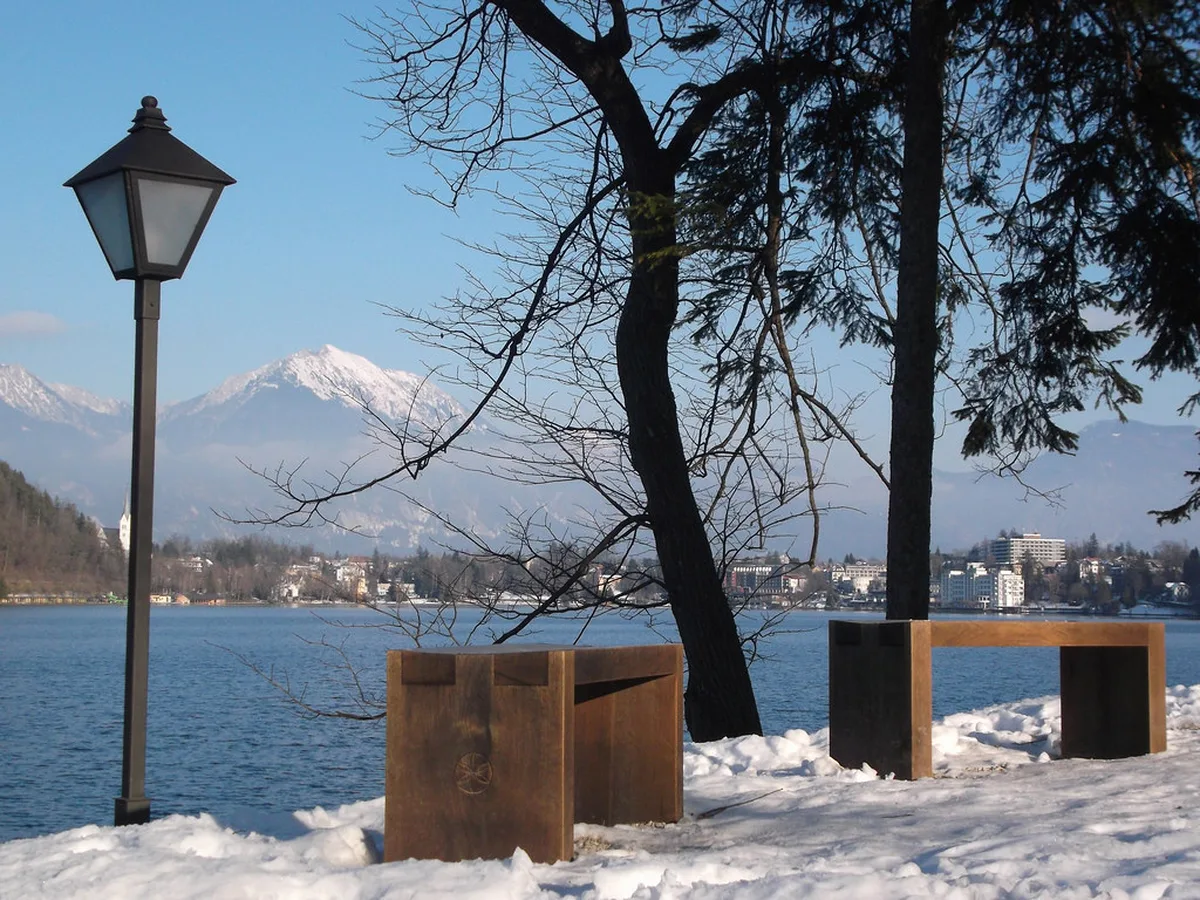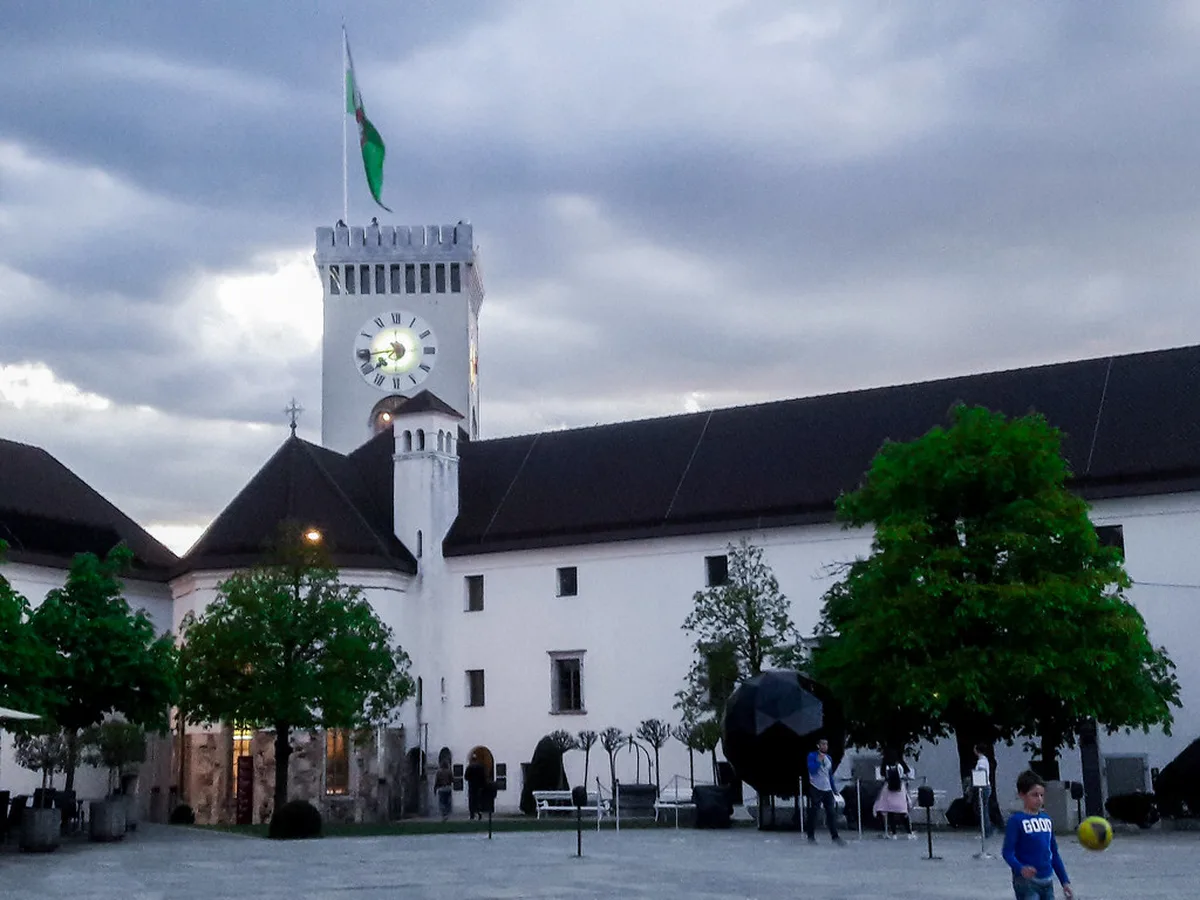
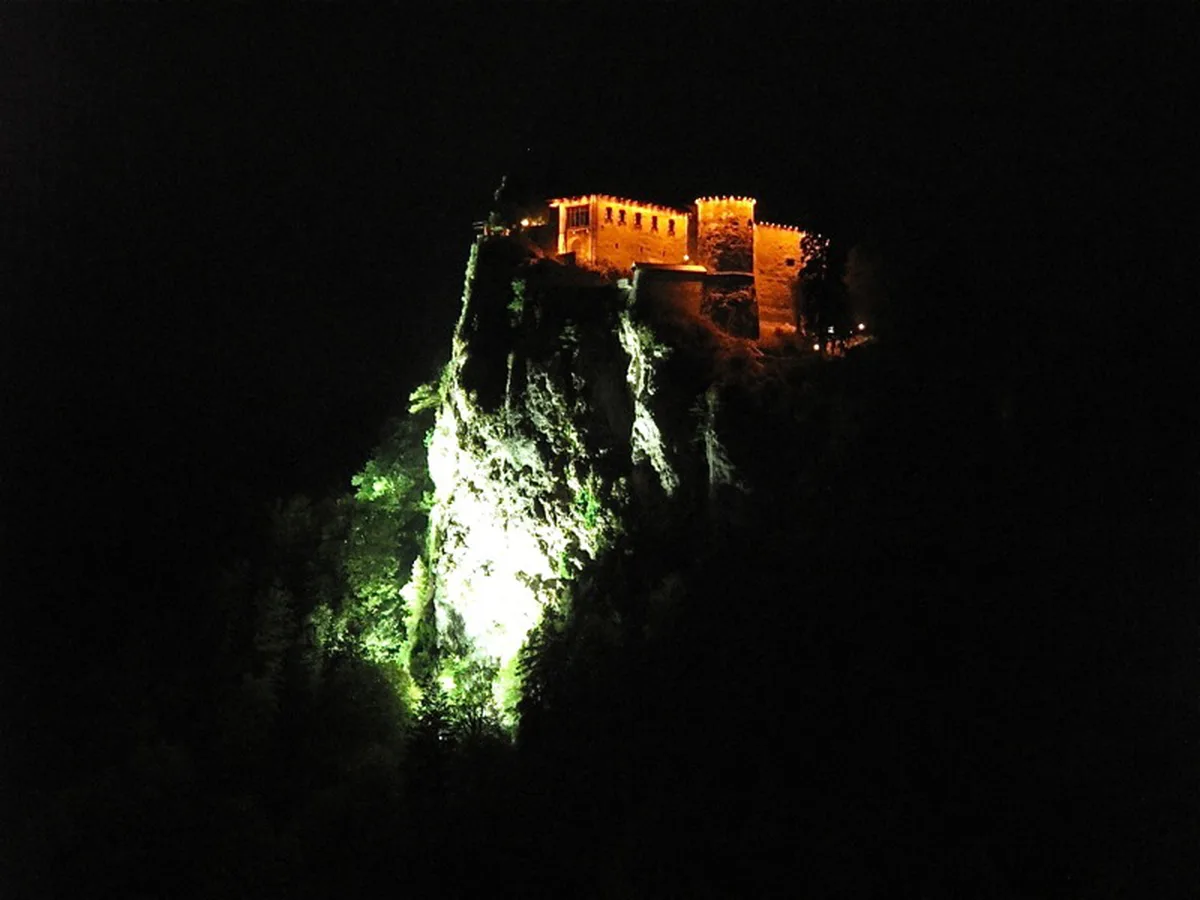
Blejski grad — Bled Castle — occupies one of the most dramatic positions of any castle in Central Europe. From its cliff 130 metres above Lake Bled's southern shore, the view encompasses the entire lake, the island church at its centre, and the Julian Alps stretching to the horizon. The castle has stood in some form for over a thousand years, making it Slovenia's oldest. It functions today as a museum complex, wine cellar, and working craft demonstration site — not a preserved ruin but a living venue worth two hours of anyone's time.
History and Structures
The first documented reference to a fortification at Bled dates from 1011, when the Holy Roman Emperor Henry II gave the estate to the Bishop of Brixen. However, the cliff above the lake was almost certainly fortified considerably earlier — the strategic position, overlooking the valley routes through the Julian Alps, was too obvious to leave undefended for long after Slavic settlement of the region.
The castle passed through several noble families over the medieval period and was repeatedly modified, strengthened, and expanded. The current two-storey structure with its characteristic round tower and upper courtyard largely reflects a 16th-century reconstruction after an earthquake damaged the earlier building. A second significant restoration was carried out in the 20th century to convert the castle into a visitor attraction without destroying its historical character.
The castle chapel, dedicated to Saint Bernard of Clairvaux, dates from the early 16th century. It contains frescoes and a carved stone font; the chapel interior is small but finely detailed and worth a deliberate look. It remains a functioning place of worship and is occasionally used for wedding ceremonies.
How to Get to Bled Castle
The most straightforward approach on foot is the castle path that begins near the Church of St. Martin in Bled village, opposite the main lake promenade. The path is clearly signposted and climbs through forest to the castle gate in about 20 minutes. The gradient is consistently steep — this is a genuine uphill walk, not a stroll — but the path is well-maintained with no technical sections.
A second, slightly longer path starts from the western end of the lake promenade and approaches the cliff from the south. It takes about 25–30 minutes and passes through quieter woodland with occasional lake glimpses through the trees. Both paths are manageable in regular walking shoes; hiking boots are not necessary in dry conditions.
Drivers can reach the castle via a narrow road that winds up the cliff from the village. A small car park sits just outside the castle entrance. Parking is free but limited — the lot holds perhaps 20 cars. It fills quickly on summer mornings; arriving early or walking up avoids the frustration of circling for a space.
Tickets and Opening Hours in 2026
- Adult admission: approximately €15
- Children (6–15): approximately €8
- Children under 6: free
- Opening hours (summer, May–September): 8am–8pm daily
- Opening hours (winter, October–April): 8am–6pm daily
- Last entry: 30 minutes before closing
The castle is open year-round, including public holidays. Tickets are purchased at the gate; there is no advance booking requirement for individual visitors, though large groups should book ahead. The admission price covers all permanent exhibitions and demonstrations.
Inside the Castle: What to See
💡 Pro Tip: Book your Bled adventures in advance through Viator for the best deals!
Bled Castle functions as a living museum complex rather than a preserved shell. The compound contains several distinct spaces spread across the upper and lower courtyards, connected by internal stairs and covered galleries. Budget at least 90 minutes to cover all of them properly.
The Castle Museum
The main museum occupies two floors of the upper building and traces the history of the Bled region from prehistoric times through the medieval period and into the modern era. Displays include Bronze Age artefacts excavated from sites around the lake, medieval weaponry and armour — including crossbows, pikes, and plate armour from the 15th and 16th centuries — an extensive collection of documents relating to the castle's ownership history, and ethnographic material covering traditional Slovenian Alpine life. Period rooms on the upper floor are furnished with original and reproduction pieces to recreate domestic interiors from different eras of the castle's occupation.
The museum is well-curated and benefits from good English-language labelling throughout. Allow 30–40 minutes for a thorough pass through the permanent collection. The upper floor contains the most visually interesting material, including scale models of the castle and lake as they appeared at different historical periods.
The Wine Cellar
Carved directly into the limestone cliff below the upper courtyard, the wine cellar is one of the castle's most atmospheric spaces. It produces wines under the Blejski grad label — mainly white Slovenian varieties including Riesling, Sauvignon Blanc, and Laški Rizling — and offers tastings at a bar inside the cellar for approximately €5–8 per glass. The stone walls maintain a constant cool temperature regardless of summer heat outside. Bottles can be purchased to take home.
The Printing Workshop
The ground-floor printing workshop houses a working replica of a Gutenberg-style moveable type press. Costumed staff run 15-minute demonstrations several times daily, walking visitors through the process of setting individual metal type characters, inking the press bed, and pulling a printed sheet. Each visitor leaves with a printed souvenir — typically a reproduction of a historical document related to the castle or the Bled region. The demonstration is well-suited to families and genuinely engaging for anyone curious about the mechanics of early printing.
The Wine Cellar
The castle wine cellar is built into the cliff below the upper courtyard. It produces wines under the Blejski grad label from grapes grown in Slovenian vineyards — primarily white varieties including Riesling, Sauvignon Blanc, and Laški Rizling. Tastings are available at the cellar bar for approximately €5–8 per glass; a selection of bottles is sold for take-home purchase. The cellar itself, carved from the rock, is atmospheric enough to be worth visiting regardless of your interest in wine.
The Printing Workshop
A dedicated workshop on the ground floor houses a working replica of a Gutenberg-style moveable type printing press. Costumed staff run demonstrations throughout the day, showing visitors the process of setting type, inking the press, and printing a sheet. At the end of the demonstration, visitors receive a printed souvenir — typically a reproduction of a historical document related to the castle or Bled. The demonstration takes about 15 minutes and is well-suited to families with children.
The Blacksmith Workshop
Adjacent to the printing workshop, a blacksmith's forge runs periodic demonstrations using traditional tools and techniques. The blacksmith produces small iron objects during demonstrations and sells finished pieces as souvenirs. The forge fire and the sound of hammer on anvil add to the castle's sense of living history rather than static preservation.
The Castle Chapel
The Chapel of Saint Bernard sits in the lower courtyard. Built in the early 16th century, it retains original stone carvings around the doorway and fragments of fresco on the interior walls. The Gothic stone baptismal font — carved from a single block of stone — is particularly fine. The chapel is small and easily missed if you follow the main crowd flow; make a deliberate detour into the lower courtyard to find it.
The View from the Top
The castle's upper ramparts provide the most easily accessible elevated view of Lake Bled. The classic vantage point — from the eastern end of the upper terrace — positions the entire lake in the foreground with the island and church in the middle distance, the village and rowing centre below, and the Julian Alps forming the backdrop. On a clear day, Triglav — Slovenia's highest peak at 2,864 metres — is clearly visible to the west, its distinctive three-headed summit ridge rising above the surrounding range. Closer in, the island church tower, the baroque church roof, and the stone steps descending to the pletna jetty are all distinguishable with the naked eye.
To the east, the view opens toward the Sava valley and the lower hills beyond Lesce, giving a sense of how strategically positioned the castle was for controlling movement through the Alpine passes. The combination of lake, island, mountains, and valley in a single unrestricted view is one of the finest elevated panoramas in Central Europe — and unlike Mala Osojnica or Ojstrica, it requires no hiking to reach.
The terrace gets busy between 10am and 2pm in high season. Morning visits — arriving at opening time (8am) — offer the view with far fewer people and with the low sun lighting the lake from the east.
Restaurant Castello
Restaurant Castello occupies the upper courtyard terrace and an interior dining room within the castle walls. The menu centres on traditional Slovenian cuisine: expect dishes like žganci (buckwheat porridge with crackling), kranjska klobasa (Carniolian sausage with horseradish and mustard), roast lamb, and seasonal wild mushroom dishes — alongside a solid wine list featuring the castle's own Blejski grad label. Mains run approximately €15–25.
The terrace is the reason to eat here. Tables look directly down onto the lake, the island, and the Alps beyond — a view that most restaurants in Slovenia would consider a once-in-a-lifetime setting. The kitchen is reliable rather than exceptional; the food is competently executed Slovenian cooking, not fine dining. But the combination of traditional cuisine, castle-aged wines, and a terrace with that view makes it a genuinely memorable meal. Booking is strongly advised for dinner in July and August; lunch on weekdays is usually easier to get without a reservation. The restaurant is open during castle hours.
How Long to Spend at Bled Castle
A visit covering the museum, wine cellar, printing demonstration, chapel, and rampart views takes 1.5 to 2 hours at a relaxed pace. If you add a meal at the restaurant, allow 2.5 to 3 hours total. The castle is compact enough that you will not feel you have missed anything by spending a single morning or afternoon there.
Tips for Visiting in 2026
💡 Pro Tip: Book your Bled adventures in advance through Viator for the best deals!
- Arrive at opening (8am): The ramparts are empty and the light is best in the first two hours after sunrise.
- Combine with the lake promenade: Walking to the castle via the lake path, then descending by the forest path on the opposite side, makes a satisfying half-day loop.
- Wear comfortable shoes: The uphill path and internal stairs require some effort; flat or low-heeled shoes are adequate but flip-flops are awkward.
- Bring water: The walk up in summer is warmer than it looks; there is no water fountain on the path.
- Photography: The castle exterior photographs best from the lake promenade below in the late afternoon, when the cliff face catches the western sun. The view from the ramparts photographs best in the morning.