Where to Stay on Paxos, Greece: Gaios, Loggos or Lakka in 2026
Paxos does not have large hotels. There is no resort complex, no all-inclusive operation, no chain hotel with a pool bar and organised entertainment. The island's accommodation market is dominated by villa rentals and small apartment properties, with a handful of simple guesthouses scattered across the three villages. This structure is part of what has kept Paxos from tipping into mass-market tourism — and it means that choosing where to stay is less about star ratings and more about which village atmosphere suits you.
For a complete overview, see our Paxos Greece travel guide.
There are three main areas to stay: Gaios (the capital), Loggos (the quietest), and Lakka (the sailing hub in the north). Each has a distinct character and suits different types of traveller.
Gaios: Most Amenities, Harbour Atmosphere
Gaios is the largest settlement on the island and the main ferry port. If you value convenience — having the boat tour operators, the ATM, the pharmacy, the small supermarket, and the widest selection of tavernas within walking distance — Gaios is the practical choice. The harbour itself is one of the most attractive in the Ionian: sheltered by two small islands, it gives the waterfront the atmosphere of a lagoon rather than an exposed port. The main square, running along the water's edge, is the social centre of the island and is at its best in the evenings when the volta brings the whole resident and visitor population out for the slow evening promenade.
Gaios is also where the Antipaxos water taxis depart and where the majority of boat tour operators are based. Staying in Gaios means maximum access to the island's organised activities and ferry connections — relevant if you are planning day trips to Corfu or Parga. The village is more active and has slightly more ambient noise than Loggos or Lakka, which is worth noting for light sleepers.
Accommodation in Gaios skews toward apartments and small guesthouses rather than private villa rentals. Options are more varied in price range than in the north of the island, though genuinely budget accommodation remains scarce.
Loggos: The Quietest Village, Best for Couples
Loggos sits on the east coast roughly halfway between Gaios and Lakka. It is the smallest of the three main villages — a tiny fishing harbour, a cluster of pastel houses, three or four excellent tavernas, and almost nothing else. This is its appeal. Visitors who stay in Loggos are typically those who have been to Paxos before and know what they are coming for: slow mornings, unhurried lunches, evenings at the waterfront tables, and days organised around walking, swimming off the rocks, and reading. It is the village best suited to couples who want tranquility over logistics.
The tavernas in Loggos have the strongest culinary reputation on the island. Vasilis in particular has been recommended consistently for years, serving fresh fish, local vegetables, and Ionian dishes in a setting directly above the water. Book ahead in July and August — tables at the good restaurants fill early.
The practical limitation of Loggos is that it has fewer services than Gaios. There is no ATM, limited shopping, and the boat tour operators are a short drive or taxi ride away in Gaios. For most visitors who stay in Loggos, this is an acceptable trade for the quality of the village atmosphere. Hire a scooter or small car from Gaios to give yourself mobility across the island. The olive grove walk between Loggos and Lakka is the island's best half-day route and starts directly from the village.
Lakka: Sailing Bay, Best for Families
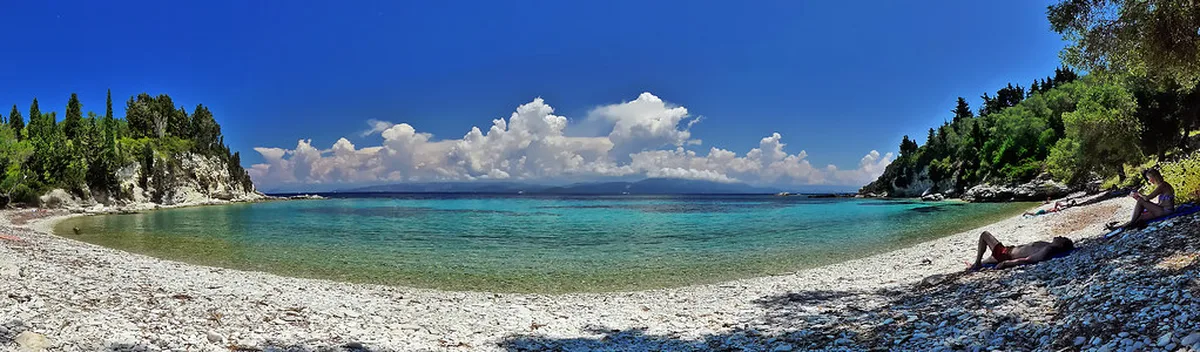
Lakka occupies the northern bay of Paxos and is the island's sailing hub. The bay is wide, sheltered, and shallow at the shore — consistently rated as one of the best natural harbours in the Ionian for sailing vessels. In summer, yachts fill the bay from June through September. The beach at Lakka is sandy-pebble and the water is calm and shallow, making it the best village for families with young children who want reliable, safe swimming conditions without the boat traffic of the southern coastline.
Lakka has a relaxed and sociable atmosphere that benefits from the sailing community's presence without being dominated by it. There are a handful of good tavernas, a small supermarket, and an easy-going evening atmosphere. The lighthouse above the village is a short walk and the views from the top are the best aerial perspective available of the island's geography.
Accommodation around Lakka trends toward villa rentals with sea views — and this is one of the most sought-after accommodation formats on Paxos, which means prices are correspondingly high. A well-positioned villa above Lakka bay with a private pool is among the most coveted bookings in the Ionian for the independent travel market. Book early for anything June through September; availability disappears months in advance.
Villa Rental on Paxos: The Dominant Option
🎯 Insider Tip: Discover the best Paxos experiences with Viator Tours!
Around 80% of the accommodation market on Paxos operates through villa and private property rentals rather than conventional hotels. This is more pronounced here than on almost any other Greek island of comparable size, and it is fundamental to understanding how to book and what to expect.
The villa rental model dominates Paxos's accommodation market in a way that is more pronounced here than on most Greek islands. A significant proportion of the island's visitors — particularly the returning British market that has come to Paxos for decades — book private villas through specialist operators. The leading specialist operators with dedicated Paxos portfolios include:
- CV Villas (cvvillas.com) — one of the largest Paxos specialist operators, with a portfolio ranging from modest two-bedroom village houses to large clifftop villas with private pools. Known for quality control and experienced destination knowledge.
- Simpson Travel (simpsontravel.com) — a long-established specialist in the Greek islands, with a curated Paxos collection focused on privacy, setting, and authenticity. Tends toward the quieter east coast and olive grove locations.
- Sunvil (sunvil.co.uk) — offers a smaller but carefully selected range of Paxos properties, particularly suitable for families and returning visitors who want flexibility and experienced support.
- The Thinking Traveller (thethinkingtraveller.com) — the premium end of the market; exceptional villas with pools, usually with a strong emphasis on setting and design.
These operators handle logistics — ferry transfers, car hire, local contacts — as well as the properties themselves, which makes them particularly useful for first-time Paxos visitors who do not yet have local knowledge. Prices reflect the premium nature of the market: expect to pay from €2,000 per week for a modest two-bedroom property in shoulder season, rising to €6,000–8,000 for a well-positioned four-to-six-person villa with a pool in August.
For those who prefer a hotel-adjacent experience, the options are limited. There are a handful of small guesthouses and apartment properties in each village, typically offering en-suite rooms or small self-contained studios. These are booked directly or through Booking.com, though availability is limited and the best properties sell out quickly. This is not an island with a budget accommodation market; even the simpler guesthouses reflect Paxos's positioning as an upmarket destination.
Budget Options on Paxos
Paxos is not a budget destination, and there is no point pretending otherwise. However, for travellers with tighter budgets, there are some more affordable options worth knowing about.
The most accessible entry-level accommodation is self-catering studios and small apartments in Gaios. Several local families rent simple studio apartments — typically one room with a kitchenette and private bathroom — directly rather than through specialist operators. These tend to appear on Booking.com and occasionally on direct local rental sites. Expect to pay €60–80 per night for a basic studio in Gaios in June or September, and €90–110 in July and August. These properties are not glamorous — functional, clean, and independently managed — but they provide a base at a fraction of villa rental costs.
A handful of small guesthouses in Gaios occupy the next step up: rooms with breakfast, or rooms with a private terrace, in the €80–120/night range in peak season. These sell out quickly for July and August and are best booked several months in advance.
Budget strategies for Paxos: visit in May, early June, or late September when prices drop 20–40% across all accommodation categories; self-cater for most meals rather than eating out; and hire a scooter rather than a car. Total daily costs for a couple staying in a simple Gaios studio, cooking most meals, and hiring a scooter can be brought to €80–120 per day — modest by Ionian standards but achievable with planning.
Accommodation Areas Outside the Three Villages
Several villa properties are positioned outside the three main villages — in the island's interior, along the east coast road, or on elevated headlands with sea views. These offer the most privacy and often the best views, but require a car or scooter, as they are not within walking distance of tavernas or services. For visitors who want to eat out most evenings rather than self-cater entirely, proximity to at least one village is worth prioritising.
The Mongonissi area in the south has a small resort-like cluster of accommodation options around the Mongonissi beach and its beach bar. This is the closest thing Paxos has to a consolidated tourist facility and suits visitors who want beach access without the logistics of driving to Gaios or Lakka each day.
Getting Around from Each Village
🎯 Insider Tip: Discover the best Paxos experiences with Viator Tours!
Paxos is connected by one main road running from Gaios north to Lakka via Loggos. The road is narrow and winding but entirely manageable on a scooter or small hire car. From Gaios to Lakka takes under 20 minutes by car. A local taxi service operates across the island and is useful for airport-equivalent transfers (ferry arrivals) though not for spontaneous journeys without pre-booking. The local bus runs but is infrequent and primarily used by islanders.
Vehicle hire from Gaios is the most flexible option: scooters run around €25–35 per day in season, small cars €50–80. Book in advance for July and August as supply is limited.
Price and Availability in 2026
Paxos accommodates a premium price point compared with larger Ionian islands. A week in a modest guesthouse room in Gaios costs from €800–1200 in July. Private villa rentals for four to six people range from €2,000 per week in quieter shoulder periods to €5,000+ per week for well-positioned villas in August. The cheapest accommodation on the island in peak season is more expensive than mid-range hotels in Corfu or Lefkada.
June and September offer meaningfully lower prices — typically 20–35% below August rates — for the same properties. Booking in February or March for a summer visit is not excessive caution; the best properties are routinely booked by January.
best time to visit PaxosSummary: Which Village for Which Traveller
- Gaios: Best for first-time visitors to Paxos, those who want maximum convenience, and travellers planning day trips to Corfu or Parga. The most practical base.
- Loggos: Best for couples who want complete tranquility, those who plan to base the trip around walking, swimming, and eating well. The most atmospheric village.
- Lakka: Best for families with young children (safe, shallow water), sailing visitors, and those who want a private villa with a sea view. The most scenic setting.