Best Time to Visit Paxos, Greece in 2026
The timing question matters more on Paxos than on many Greek islands. Paxos is tiny — 25 square kilometres, three villages, limited infrastructure — which means that the difference between a quiet June week and an August Saturday afternoon is extreme. The island does not expand to absorb peak-season demand; it simply becomes more crowded in proportion to its small scale. The good news is that the ideal windows for a visit are clearly defined and generous.
For a complete overview, see our Paxos Greece travel guide.
This guide gives you a month-by-month breakdown of what to expect on Paxos in 2026: weather, water temperature, crowd levels, ferry access, and which activities and businesses are actually open.
The Short Answer: June and September
If you want one recommendation: visit Paxos in June or September. Both months offer warm, stable weather, a sea warm enough to swim in comfortably, full access to all three villages' tavernas and services, and a crowd level that feels proportionate to the island rather than overwhelming it. Prices are lower than peak and accommodation is available without booking a year in advance. Either month gives you the best version of what Paxos is.
Month-by-Month Guide
April and Early May: Quiet and Green
April and the first half of May are the quietest months with any meaningful tourist presence. The island is extraordinarily green — the olive groves particularly — and the light at this time of year has a quality that summer visitors miss entirely. Daytime temperatures range from 17°C to 22°C, pleasant for walking and exploration but cool for swimming (sea temperature around 18–19°C). The key limitation is availability: many tavernas, tour operators, and accommodation properties do not open until mid or late May. This is not a trip for those who want to eat at Loggos's best restaurant or book a sea cave tour — those options may simply not yet be operating.
Late May: The Opening
By late May most of the island's tourism infrastructure is back online. Temperatures reach 22–25°C during the day, and the sea begins warming into swimmable range (20–21°C). The island is still quiet. This is excellent timing for walkers who want the olive grove trails without the heat, and for those who want to experience Paxos at its least commercial. The downside is that some accommodation options and the full range of Gaios boat tours may still be limited. Antipaxos water taxis typically begin regular service from late May.
June: The Best Month Overall
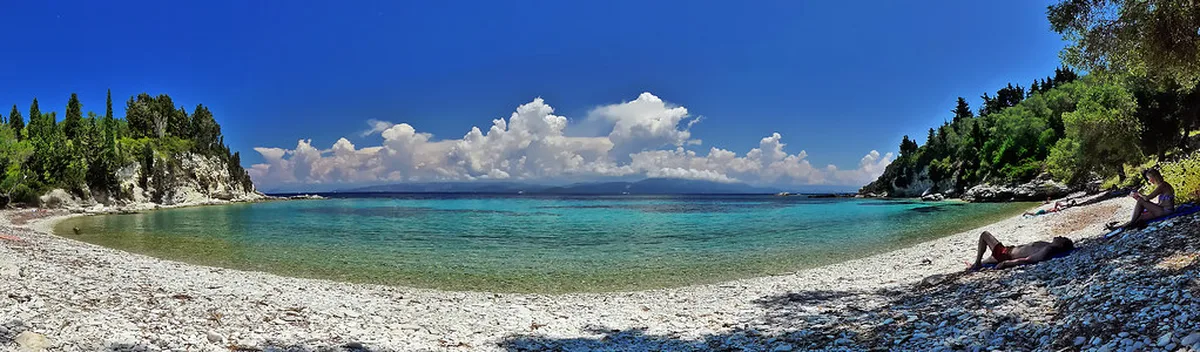
June is the consensus best month to visit Paxos. The full season is open, the weather is consistently warm (26–28°C), and the crowds have not yet reached their August peak. Sea temperatures settle around 22–24°C — comfortably warm. The Antipaxos beaches are glorious and accessible without the morning rush that defines August. Tavernas are operating at full pace. Boat tours to the sea caves run daily. This is when the island is most itself: alive with the season, but not overwhelmed by it.
Antipaxos island guideJuly: Hot and Growing
July is the beginning of high season proper. Temperatures rise to 28–32°C. The sea is warm (24–25°C). The island is busier, ferry bookings fill up, and accommodation requires advance planning. Antipaxos is visibly crowded at peak times — the beach at Voutoumi in particular can feel uncomfortably full on August-adjacent weekends. But July is still a good time to visit if you manage it correctly: book the Antipaxos water taxi for an early departure, secure ferry return times in advance, and accept that some spontaneity has to be traded for logistics. The evenings are warm enough to sit outside late into the night, which is one of Paxos's great pleasures.
August: High Season, Maximum Crowds
August is the busiest and most expensive month on Paxos. The island reaches capacity in a way that is perceptible — queues for the water taxi to Antipaxos, full restaurants, accommodation booked months in advance, and a pace that is slightly at odds with what makes Paxos special. Prices are at their annual peak. None of this makes August a bad time to visit, especially if peak-season Greek island atmosphere is what you want, but it is the worst month for those seeking the quieter Paxos. The sea is at its warmest (27–28°C) and the days are longest. Book everything — ferry, water taxi, accommodation, car rental — before you leave home.
September: The Best Month for Returning Visitors
September is, by a narrow margin, the best month of all for those who have flexibility. The crowds thin noticeably after the first week, prices drop from their August peak, but the sea remains warm (25–27°C through early September, dropping to 23–24°C by month's end). All tavernas are still open and operating at their best, having had the full summer to refine their rhythm. The light in September is warmer and more golden than in June. The olive harvest begins in late September, and with it a particular quality of activity in the groves. This is when locals who work the season begin to relax, and the relationship between visitor and island becomes more reciprocal.
October: The Wind-Down
Early October is still viable — sea temperature around 22°C, quieter than September, some accommodation and tavernas still open. But the second half of October sees rapid closures: tour operators wind down, water taxi services to Antipaxos become irregular, and several Loggos and Lakka tavernas close entirely. The ferry service to Corfu continues year-round, but with reduced frequency. October is a month for those who specifically want an off-season Paxos — beautiful, atmospheric, and almost entirely without tourist infrastructure.
November to March: Effectively Closed
Paxos in winter is a different island in every sense. The permanent population of around 2,300 reclaims the village squares, the tavernas that remain open are the ones frequented by locals, and the tourist economy is essentially dormant. This is not tourist-hostile; it is simply not oriented toward visitors. The ferry connections reduce to a minimum service. There is no boat access to Antipaxos. The island is beautiful — the olive harvest runs through November, and the winter storms on the west coast cliffs are dramatic — but it is not a holiday destination in the conventional sense until April or May.
Average Monthly Temperatures and Sea Conditions
| Month | Air Temp (Day) | Air Temp (Night) | Sea Temp | Rainfall | Crowd Level |
|---|---|---|---|---|---|
| April | 19°C | 12°C | 18°C | Moderate | Very low |
| May | 23°C | 15°C | 20°C | Low | Low |
| June | 27°C | 19°C | 23°C | Very low | Medium |
| July | 30°C | 22°C | 25°C | Negligible | High |
| August | 31°C | 23°C | 27°C | Negligible | Peak |
| September | 27°C | 20°C | 25°C | Occasional showers | Medium, falling |
| October | 22°C | 16°C | 22°C | Moderate | Low |
Sunshine and Rainfall
🎯 Insider Tip: Discover the best Paxos experiences with Viator Tours!
Paxos receives around 2,600 hours of sunshine per year — roughly equivalent to Cyprus or the Greek mainland coast. June through August are essentially rainless; the likelihood of a rain day is below 5% in July. September brings occasional brief afternoon thunderstorms that rarely last more than an hour. October sees genuine rainfall returning, and the winter months are the island's wettest, with the Ionian coast receiving more rain than the eastern Aegean islands.
Paxos Events and Local Festivals
Feast of the Assumption — 15 August
The Feast of the Assumption of the Virgin Mary (Dekapentavgoustos in Greek) is the most significant religious festival in the Orthodox calendar after Easter, and it is marked with particular devotion in the Ionian islands. On Paxos, the celebrations are centred on the small Church of the Panagia on the island of the same name in Gaios harbour — the islet that helps shelter the lagoon-like waterfront. A religious service is held on the evening of 14 August, followed by a procession. On 15 August itself, the church is open throughout the day and the village square holds an informal celebration. If you are on the island for this date, it is worth spending time in Gaios to observe it — not as a performance for tourists but as a living community occasion.
Panigiri Village Festivals
Throughout the summer — typically July and August — small panigiri festivals mark the feast days of local saints' churches across the island. These are informal community gatherings: live music (usually a traditional Ionian ensemble with accordion and violin rather than pop music), grilled meat, local wine, and dancing that starts late and runs past midnight. They are not advertised in advance through tourist channels, but locals and returning visitors know when they are coming. Ask at your accommodation. Attending a panigiri is one of the most authentic cultural experiences available on a Greek island in summer.
Easter on Paxos
Greek Orthodox Easter is the most important festival of the year, and if your visit falls in late April or early May you may coincide with it. Paxos celebrates Easter with the Epitaphios procession on Good Friday evening — a candlelit march through Gaios — and the midnight Resurrection service on Holy Saturday. The island is at its greenest and most beautiful at Easter, the crowds are minimal, and the experience of the religious calendar playing out in a small community is one that few package tour visitors ever see. Note that many businesses are closed on Easter Sunday itself.
Sailing Season
Paxos, and Lakka bay in particular, is a significant sailing destination. The main sailing season runs from May through September, with July and August seeing the highest concentration of yachts in Lakka and Gaios. If sailing is the purpose of your trip, June and September offer more comfortable sailing conditions and easier anchorage than August. The Ionian is generally considered the best cruising ground in Greece for its reliable Maistros wind pattern and sheltered island-hopping distances.
When to Visit Antipaxos
🎯 Insider Tip: Discover the best Paxos experiences with Viator Tours!
Antipaxos water taxis typically begin operating in late May and continue through early October. Peak access is from June through September. The beaches are at their most beautiful in June and September — vivid water, manageable crowds. August is the least pleasant time to visit Antipaxos: the beaches can feel crowded relative to their size, and the water taxis are at capacity. If you visit in August, go early — first water taxi of the day — and accept that you will share the beach.
Practical Considerations by Season
Accommodation on Paxos should be booked at least three months ahead for July and August, and one to two months ahead for June and September. Late May and October visitors have the most flexibility. Car and scooter rental is available throughout the season but stocks deplete quickly in August — book with your accommodation before arrival. The single ATM in Gaios sometimes runs out of cash at peak season weekends; bring enough euro from elsewhere. The island's one pharmacy closes in winter; bring any essential medications.