Best Day Trips from Hvar Island in 2026: Vis, Korčula, Split & More
Hvar sits at the geographic heart of the Dalmatian island chain, within practical reach of some of Croatia's most compelling destinations. To the south-west lies Vis, the outermost inhabited island of the group, with its legendary Blue Cave. To the east, the walled town of Korčula offers one of the Adriatic's best-preserved medieval streetscapes. Northward across the water, Split's Diocletian's Palace is a UNESCO World Heritage Site you can explore in a morning. And just offshore from Hvar Town itself, the Pakleni Islands provide a day trip that does not even require leaving the archipelago. This guide covers the six best day trips from Hvar in 2026, with practical details on how to reach each one.
For a complete overview, see our Hvar Island Croatia travel guide.
Other Amazing Day Trips from Hvar Town
Before diving into individual destinations, it helps to understand your logistics. Hvar Town is the departure point for most catamaran and ferry services. Day trips by ferry or catamaran work best in June, September, and October when timetables are full but crowds are manageable. In July and August, popular excursions — particularly to the Blue Cave — book up days in advance; secure your spots online or through a tour operator the day before at the latest.
Vis Island and the Blue Cave
Vis is the day trip most often cited by visitors to Hvar, and for good reason. The ferry from Hvar Town takes approximately one hour and arrives in Vis Town, a quiet harbour that was closed to foreign visitors for military reasons until 1989 and retains a certain untouched quality as a result. The town itself has a picturesque Habsburg-era harbour front, several excellent wine bars (Vis produces the distinctive Vugava white wine), and enough lanes and churches to fill a leisurely morning.
The headline attraction is the Blue Cave (Modra špilja) on the small island of Biševo, about a 30-minute boat ride from Komiža village on Vis's western coast. Inside the cave, filtered sea light enters through an underwater opening and illuminates the water and rock walls in shades of electric blue and silver — the effect is most intense between 11:00 and noon. Cave entry is managed by the local authority and limited to small boats; visitors must transfer from larger vessels to dinghy-sized craft to enter. Entry costs around 100 HRK; add transport from Komiža for the total. Organised Blue Cave tours departing directly from Hvar Town harbour (8–9 hours, 550–700 HRK including cave entry) are the easiest option and handle all transfers. Book at least 24 hours ahead in summer.
Komiža itself is worth the journey independently of the cave: a small fishing port under a fortress hill, with a working boat-building tradition and one of the Adriatic's most authentic fish markets in the early morning.
Korčula Town
Korčula Town is reachable from Hvar by a catamaran service (check current timetables — seasonal catamarans often connect the two islands directly, roughly 90 minutes). Alternatively, ferries run from Orebić on the Pelješac peninsula directly to Korčula, but this routing requires more connections from Hvar.
The old town of Korčula is sometimes called "Little Dubrovnik" — an enclosed medieval city on a small peninsula, ringed by walls and towers, with a Renaissance cathedral at its heart. The streets are arranged in a herringbone pattern said to channel the summer breeze while blocking the cold winter bura wind — whether this was intentional or myth, it works. St. Mark's Cathedral dominates the main square; the adjacent Treasury holds a small collection of medieval artworks. A house in the northern part of the old town is claimed to be the birthplace of Marco Polo, though the historical evidence is disputed. The tower is open to visitors for harbour views. Korčula old town can be comfortably explored in three to four hours, leaving time for a seafood lunch at one of the waterfront restaurants before returning to Hvar.
Split and Diocletian's Palace
💡 Pro Tip: Book your Hvar adventures in advance through Viator for the best deals!
Split is the closest major city to Hvar and an easy day return by catamaran (one hour each way, multiple departures daily). The centrepiece is Diocletian's Palace, built by the Roman emperor Diocletian as his retirement residence in the late 3rd and early 4th centuries AD. Unlike most Roman ruins, the palace is not a museum but a living neighbourhood: restaurants, bars, apartments, and shops occupy the spaces between columns and within tower bases that have been in continuous use for 1,700 years.
The most impressive spaces inside the palace complex are the Peristyle (the ceremonial forecourt, now a café terrace), the Cathedral of St. Domnius (converted from Diocletian's mausoleum, with a Romanesque bell tower you can climb), and the subterranean halls beneath the complex — the best-preserved Roman basement structure in the world and the set used for the dragon dungeon scenes in Game of Thrones. Entry to the palace area is free; individual sights within it (cathedral, tower, subterranean halls) charge separately (30–50 HRK each). Allow three to four hours for a thorough visit, plus time for lunch in the old town. Split's Pazar (produce market) just outside the palace walls is excellent for buying local cheese, cured meats, and seasonal fruit.
Brač and Zlatni Rat Beach
Zlatni Rat (Golden Horn) is Croatia's most recognisable beach — a 500-metre pebble spit that juts into the Adriatic from the town of Bol on Brač's southern coast and shifts direction with the current. It appears on more Croatian tourism posters than any other image and lives up to the pictures: the pebbles are fine and white, the water on both sides is shallow and clear, and the beach is backed by pine forest that provides shade when the summer sun is at its peak.
Brač is reachable from Hvar Town by water taxi or organised excursion (check current timetables; direct connections are seasonal). The ferry from Split to Supetar on Brač is the most reliable connection, making Zlatni Rat more practical as a day trip for travellers transiting through Split. However, organised speedboat tours from Hvar Town to Zlatni Rat run daily in summer and take about 45 minutes, combining the beach visit with a swim stop en route. Expect to pay 400–500 HRK for a tour including transport but not sun lounger hire (around 60 HRK per day at the beach).
Stari Grad and the Stari Grad Plain
💡 Pro Tip: Book your Hvar adventures in advance through Viator for the best deals!
Stari Grad is the oldest town on Hvar Island — founded by Greek colonists from Paros in 384 BC, making it one of the oldest continuously inhabited settlements in Europe. The town itself has a calm, low-key atmosphere very different from Hvar Town: a narrow inner harbour called the Hvar Channel, a handful of Renaissance palaces, and a slower pace that rewards an afternoon of wandering without agenda. The Dominican monastery at the edge of town holds a small museum with Greek artefacts and works by the painter Juraj Plančić, a local figure.
Behind Stari Grad lies the Stari Grad Plain (Starogradsko polje), a UNESCO World Heritage Site. The Greek colonists who founded the town also laid out an agricultural grid — chora — across the flat centre of the island, dividing it into regular plots bounded by dry-stone walls. This landscape has been farmed continuously for 2,400 years without significant alteration to the basic layout. Cycling or walking the field roads through the plain is one of the most quietly extraordinary things you can do on Hvar. Rent a bicycle in Stari Grad town and spend two to three hours on the plain before returning for dinner. The bus from Hvar Town to Stari Grad runs roughly hourly in summer and takes about 45 minutes.
Pakleni Islands (Local Day Trip)
If you want a full day of swimming, snorkelling, and beach time without taking a long ferry, the Pakleni Islands immediately offshore from Hvar Town are the obvious answer. Water taxis from the main pier reach the main destinations in 10–20 minutes. Palmižana bay on Sveti Klement is the most popular choice for a full-day visit — beach, restaurant, botanical garden, and snorkelling all in one location.
Pakleni Islands boat tripFerry Times and Booking Tips by Destination
Vis Island
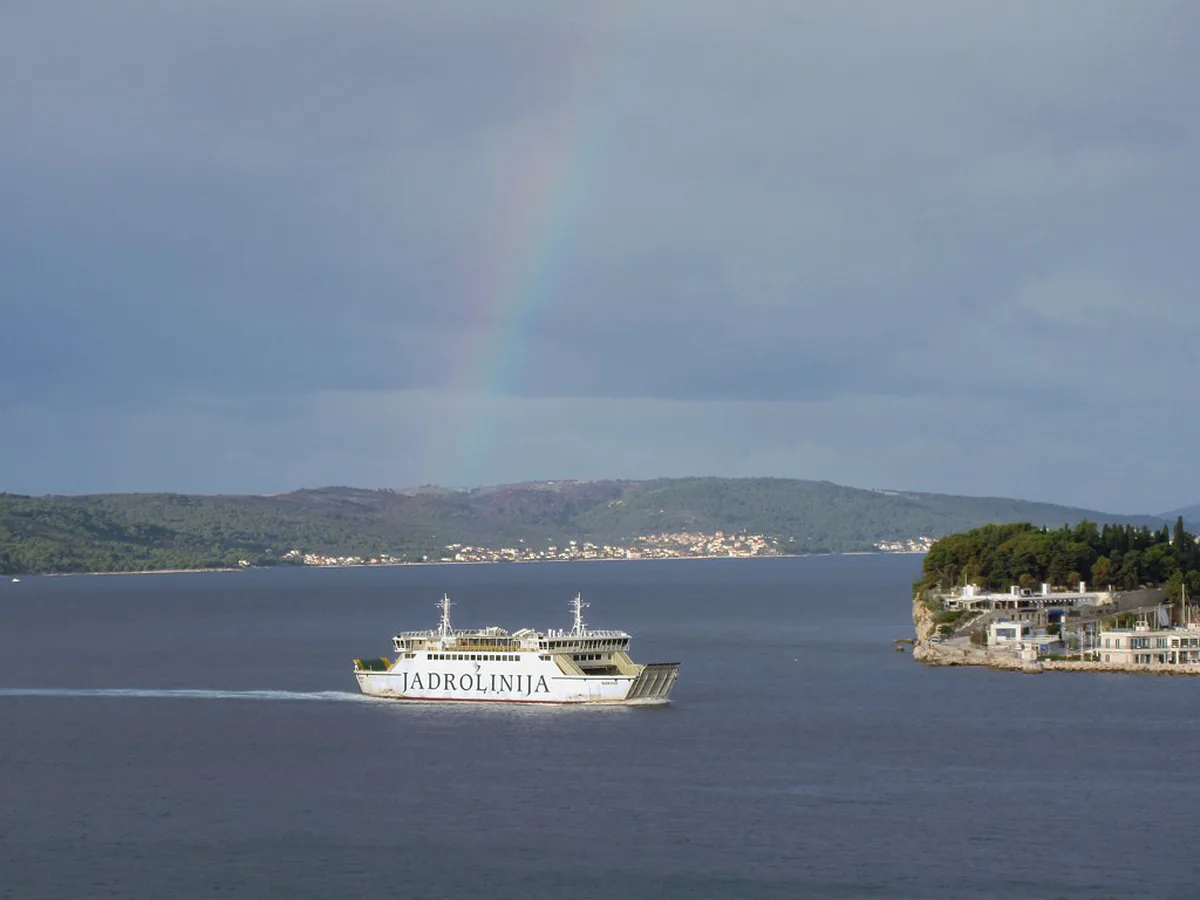
The JADROLINIJA ferry from Hvar Town to Vis Town runs once or twice daily in peak season, typically departing Hvar Town around 07:00–08:30 and returning from Vis in the late afternoon (around 17:00–18:00). Journey time is approximately one hour. Foot passenger tickets cost 50–70 HRK each way and can be booked at jadrolinija.hr or at the Hvar Town pier ticket office. There is no car ferry from Hvar to Vis — drivers must route through Split. For a Blue Cave combination, buy a seat on an organised tour departing directly from Hvar Town harbour (7:30–8:00 start, returns around 17:00–18:00); these cost 550–700 HRK including all boat transfers and cave entry. Book at least 48 hours ahead in July and August — cave capacity is strictly managed and tours sell out. Bring a light jacket for the boat crossing even in summer; the speed over open water creates wind chill.
Korčula Town
The Krilo catamaran connects Hvar Town to Korčula Town in approximately 90 minutes, typically with a morning departure from Hvar (around 09:00–10:00) and a return from Korčula in the mid-to-late afternoon. Check current timetables at krilo.hr as the schedule changes annually. One-way tickets cost approximately 60–80 HRK; book online in advance for July and August as this route fills with island-hoppers. Once in Korčula, the old town is compact and fully walkable — no additional transport needed. The Marco Polo House and tower are close to the cathedral and charge a modest entry fee (around 40 HRK). Several good restaurants on the old town waterfront offer fresh fish and local Grk white wine (Korčula's signature grape); lunch can be booked or walked in depending on season.
Split
Catamarans from Hvar Town to Split depart multiple times daily in summer. The first sailing (Krilo or JADROLINIJA, typically 06:30–07:30) is the best choice for a full day in Split — arriving by 08:30 gives you time to see the palace before the crowds build. Return catamarans from Split to Hvar Town run through the afternoon and early evening; the last departure is typically 19:00–21:00 depending on season. Book online at krilo.hr or jadrolinija.hr for guaranteed seats — peak-season morning departures from Split sell out. Entry to the main palace area, Pazar market, and most outdoor spaces in Split is free; individual attractions inside the palace cost 30–50 HRK each.
Brač and Zlatni Rat
There is no scheduled passenger ferry directly from Hvar Town to Bol on Brač — the most reliable route via public transport is Split to Supetar by JADROLINIJA car ferry (50 minutes), then a bus from Supetar to Bol (45 minutes). For day trips from Hvar, the practical option is an organised speedboat tour departing from Hvar Town harbour around 09:00–10:00 and returning by 16:00–17:00. These cost 400–500 HRK per person and include the 45-minute speedboat crossing each way plus free time at Zlatni Rat. Book at tour operators on the harbour front — no advance booking required outside peak season, but secure spots the day before in July and August. The beach itself is free; sun lounger hire costs around 60 HRK per day.
Stari Grad and the UNESCO Plain
Stari Grad is reachable from Hvar Town by the island's public bus (45 minutes, 25–35 HRK, runs hourly in summer). No booking required — board at the main bus stop near the Hvar Town car park. The last bus back from Stari Grad to Hvar Town in peak season typically runs around 21:00–22:00; confirm the timetable at the stop. Bicycle hire in Stari Grad is available from shops on the main street near the harbour (80–120 HRK per day for a hybrid bike). The UNESCO plain cycle circuit takes 2–3 hours; the monastery museum in Stari Grad town charges around 30 HRK entry. Budget a full day to combine the bus journey, plain cycling, and a seafood lunch on the inner harbour.
Which Day Trip Is Best for You?
Not every day trip suits every traveller. Here is a quick guide to matching the destination to your priorities.
- For a once-in-a-lifetime natural spectacle: Vis and the Blue Cave. The iridescent blue light inside the cave is genuinely extraordinary and worth the logistics. Book ahead, go early in the day, and pair with a Komiža fish market visit.
- For history and architecture: Split (Diocletian's Palace, Roman ruins, Game of Thrones filming locations) or Korčula (medieval walled old town, Marco Polo associations, cathedral). Split is the stronger destination; Korčula is less crowded and more intimate.
- For beach seekers who want something iconic: Zlatni Rat on Brač. If you have already been to the Pakleni Islands and want a different beach experience, the golden pebble spit at Bol is the right choice.
- For travellers interested in Croatian history and culture without a long boat crossing: Stari Grad. It is the oldest continuously inhabited settlement in Croatia and the UNESCO plain is one of the most quietly extraordinary landscapes in the Mediterranean — reachable by a 45-minute bus ride from Hvar Town.
- For families with young children: Stari Grad (short journey, manageable for kids) or the Pakleni Islands (close, fast, great water). The Blue Cave excursion involves long boat rides and can be tiring for young children.
- For solo travellers or couples on a tight budget: Split (catamaran is cheap, city entry is largely free) or Stari Grad (bus fare is minimal, bicycle hire is affordable). Vis and Korčula cost more due to additional boat transfers.
Practical Tips for Day Trips from Hvar
💡 Pro Tip: Book your Hvar adventures in advance through Viator for the best deals!
- Check current catamaran and ferry timetables at jadrolinija.hr and krilo.hr — schedules change seasonally and some routes are summer-only.
- Book organised tours (especially Blue Cave excursions) at least 24–48 hours ahead in July and August.
- For Split day trips, the first catamaran departure from Hvar Town (usually around 07:00–08:00) gives you the most time in the city before the afternoon return.
- Carry cash for cave entry fees, water taxi tips, and small restaurants that do not accept cards.
- Sun protection is essential on boat crossings — the Adriatic reflects UV strongly, and even partly cloudy days cause sunburn on open water.