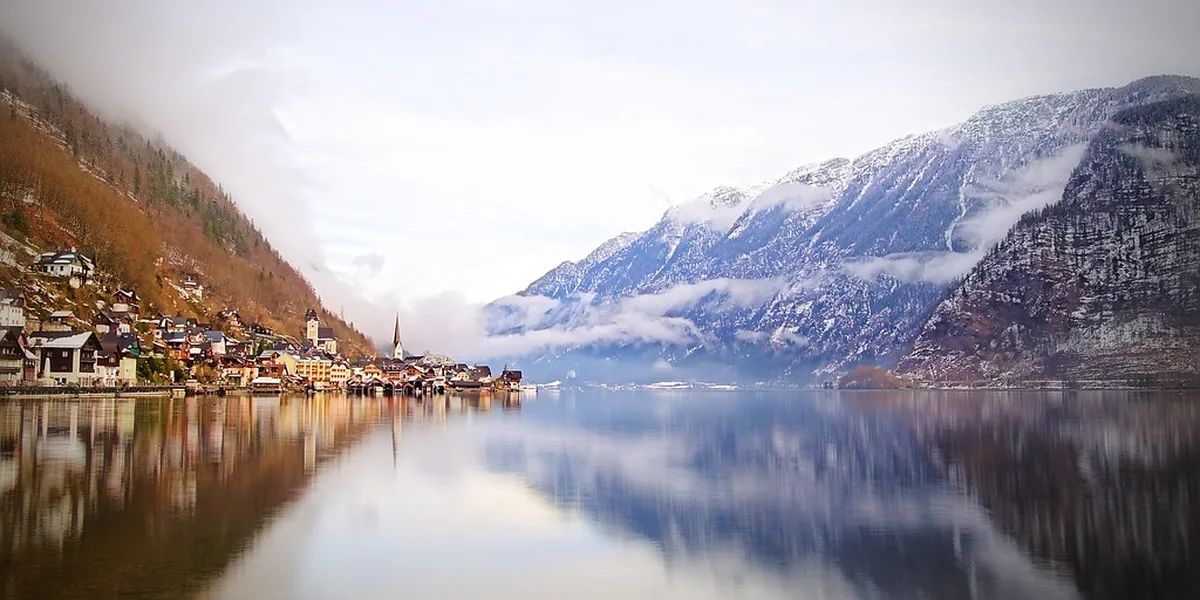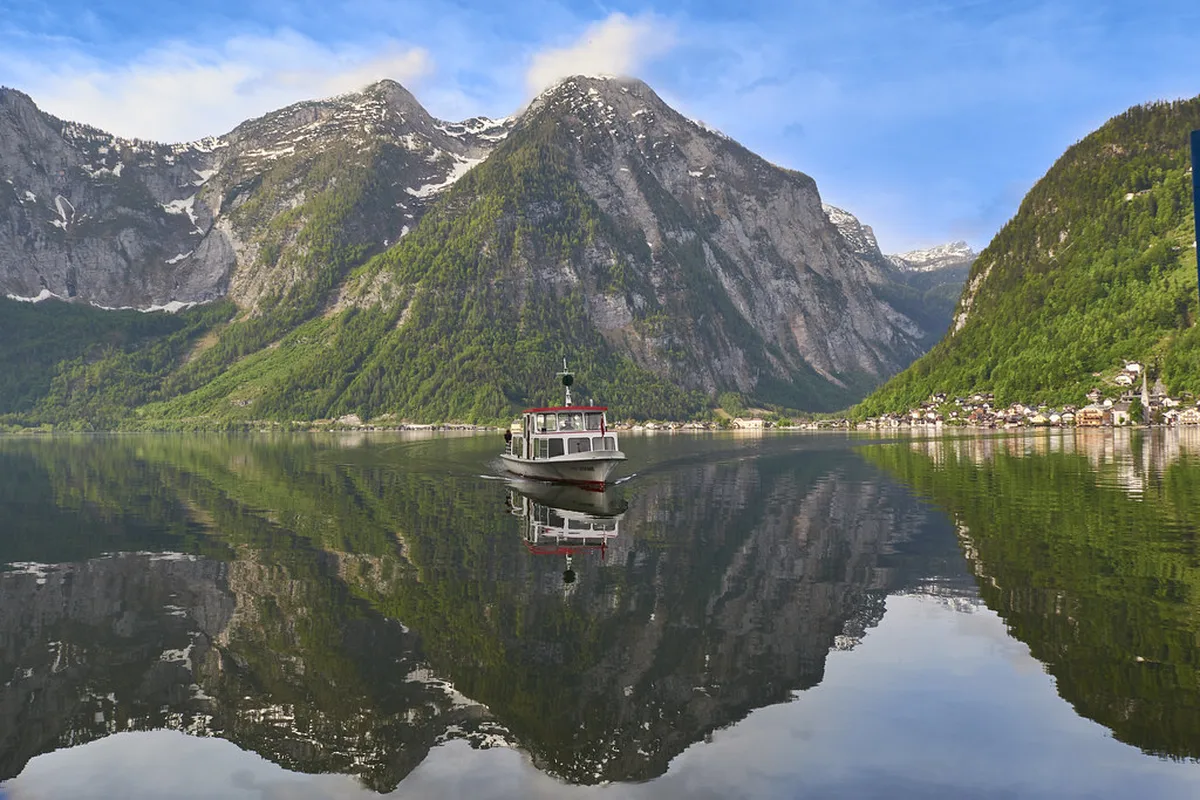
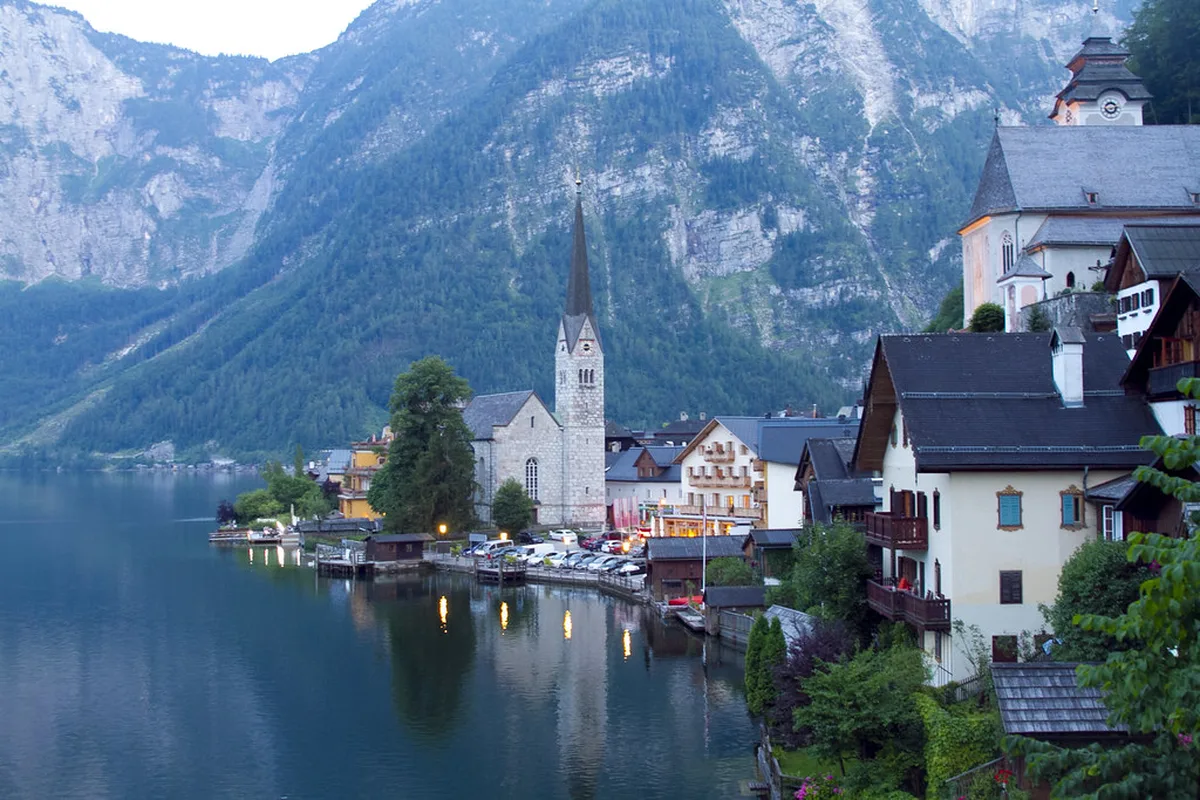
Hallstatt is an extraordinary base for exploring the wider Salzkammergut region of Austria. Within 30 to 90 minutes, the village puts visitors in reach of ice caves carved into the Dachstein glacier, the former summer residence of Emperor Franz Joseph, one of Europe's most scenic lake valleys, and Salzburg. Many visitors who stay for two or three nights spend one full day in Hallstatt itself and use the others to explore the surrounding landscape.
For a complete overview, see our Hallstatt Austria travel guide.
Driving Distances and Times from Hallstatt
For visitors with a car, the following distances and approximate driving times from Hallstatt village apply in normal conditions. Road conditions on mountain routes — particularly the lakeside B166 and the Gosau valley road — can slow progress in peak summer due to traffic and in winter due to snow or ice.
- Obertraun (Dachstein Ice Cave): 6 km, approximately 12–15 minutes via the B166 lakeside road around the southern end of the lake.
- Bad Ischl: 30 km, approximately 30–35 minutes via Bad Goisern on the B145.
- Gosau: 28 km, approximately 30 minutes via Bad Goisern and the Gosau valley road (B166 to L542).
- St. Wolfgang (Wolfgangsee): 45 km, approximately 45–50 minutes via Bad Ischl and the B158 north.
- Salzburg: 75 km, approximately 75–85 minutes via Bad Ischl and the E60/A1 motorway. Traffic adds 15–20 minutes on summer weekday mornings.
- Linz: 100 km, approximately 90 minutes via Bad Ischl and the A1.
- Vienna: 280 km, approximately 3 to 3.5 hours via the A1 Westautobahn.
Note: the road between Hallstatt and Obertraun (B166) is narrow in sections and runs along the lake edge. In July and August, heavy traffic can add 15–20 minutes to the Obertraun drive, particularly on weekends. Leaving before 9am avoids the worst of it.
Dachstein Ice Cave and Mammoth Cave (30 Minutes)
The Dachstein Ice Cave at Obertraun is the closest major day trip from Hallstatt and arguably the most dramatic. Located on the Dachstein plateau above the village of Obertraun — on the opposite shore of the Hallstätter See — the cave complex includes the Dachstein Giant Ice Cave, one of the largest ice caves in the world, and the Mammoth Cave, a vast karst system extending deep into the limestone plateau.
Reaching the caves requires a cable car from Obertraun, which rises in stages to the plateau. The ice cave and mammoth cave are each accessed via separate guided tours, approximately 50 minutes each. Both are physically engaging — involving significant walking, steps, and some narrow passages — and are temperature-controlled by nature at around 0–5°C inside. Warm clothing is essential even in summer.
From Hallstatt, Obertraun is approximately 30 minutes by car around the southern end of the lake. A bus connects the two villages, though the schedule is infrequent and requires checking. The cable car and cave tours are sold as combined tickets. Booking online is recommended in summer.
A third attraction on the Dachstein plateau is the "5 Fingers" viewing platform — a steel structure extending over the cliff edge with five glass-bottomed fingers pointing outward over a vertical drop of nearly 400 metres. The view encompasses the entire Salzkammergut lake district from above and is genuinely vertiginous.
Bad Ischl: The Emperor's Summer Spa Town (30 Minutes)
Bad Ischl is the nearest town of any size to Hallstatt, 30 minutes away by road or bus. From 1849 until 1914, it served as the summer residence of Emperor Franz Joseph I of Austria-Hungary, who came here for the salt baths, the clean mountain air, and the hunting. The Imperial Villa — the Kaiservilla — where Franz Joseph spent every summer of his 68-year reign, is preserved and open to visitors as a museum. It is one of the most intact imperial residences in Austria, still partly occupied by Habsburg family members and filled with hunting trophies, personal effects, and the furniture of a working palace rather than a curated exhibition.
The town itself is handsome and lightly touristed compared to Hallstatt. The Konditorei Zauner bakery on the main promenade is one of Austria's most celebrated, with a tradition of confectionery going back to 1832. The spa facilities that originally attracted the imperial court have been modernised and are available to visitors. Bad Ischl has a range of cafes, restaurants, and accommodation that makes it a practical alternative base for those finding Hallstatt too crowded or expensive.
Bad Ischl was also the place where Franz Joseph signed the declaration of war against Serbia in July 1914, setting in motion the sequence of events that became the First World War — a historical weight the town carries quietly.
Gosau Valley and Gosausee (30 Minutes)
🎯 Insider Tip: Discover the best Hallstatt experiences with Viator Tours!
The Gosau Valley runs west from the Dachstein massif and contains one of the most dramatic lake views in Austria: the Gosausee, a mountain lake with the Dachstein glacier visible at the head of the valley and reflected in the water on calm days. The lower Gosausee is easily accessible by road and walking path; the upper Gosausee, at higher altitude, requires a more substantial hike or a gondola.
The drive from Hallstatt to Gosau takes about 30 minutes through the mountains via Bad Goisern. The valley is at its most spectacular in autumn when the surrounding larch forests turn gold and orange, and in winter when the glacier and the frozen lake create a landscape of exceptional stark beauty. In summer, the Gosausee's turquoise colour and the glacier backdrop draw significant visitors but nowhere near the scale of Hallstatt itself.
For photographers and walkers, the Gosausee viewpoint at the far end of the lower lake — a 30-minute flat walk from the car park — is one of the finest views in the Salzkammergut. The Dachstein glacier, the rock walls of the massif, and the reflective lake surface combine in a composition of considerable scale.
Salzburg (90 Minutes)
Salzburg is the nearest major city to Hallstatt and makes a full and rewarding day trip for visitors with two or more nights in the region. The city is approximately 90 minutes from Hallstatt by car via Bad Ischl. By public transport, the route involves buses to Bad Ischl and onward services to Salzburg, with total journey times of around 2 to 2.5 hours each way.
Salzburg's principal attractions are well documented: the UNESCO-listed Old Town (Altstadt) centred on the Salzach River, the Hohensalzburg fortress on its cliff above the city, the birthplace of Wolfgang Amadeus Mozart on Getreidegasse, the Mirabell Palace and gardens, and the cathedral complex. The city is manageable on foot over a full day. Salzburg's food and cafe culture — particularly the Kaffeehaus tradition and the bakeries selling Mozartkugeln — is significantly more varied than Hallstatt's limited restaurant options.
For visitors using Hallstatt as a base rather than a standalone stop, a day in Salzburg provides essential urban contrast and uses time well. It is also possible to base in Salzburg and visit Hallstatt as a day trip from there, though the logistics (90 minutes each way by public transport) constrain the time available in the village.
Wolfgangsee and St. Wolfgang (45 Minutes)
The Wolfgangsee is another Salzkammergut lake, approximately 45 minutes north of Hallstatt by road via Bad Ischl. The village of St. Wolfgang on the eastern shore is a traditional Austrian resort town with a celebrated pilgrimage church — the Pfarrkirche St. Wolfgang — containing one of the most important Gothic altarpieces in Austria, the Pacher Altar of 1481. The village itself is picture-postcard Salzkammergut: painted facades, flower boxes, and a lakefront that in peak season resembles Hallstatt in its density of visitors.
The Schafberg mountain rising above St. Wolfgang is accessible via a historic rack railway — the Schafbergbahn, operating since 1893 — to the summit at 1,783 metres, with views extending across the entire Salzkammergut lake district. The train journey takes 35–40 minutes each way. The Schafbergbahn was featured in the 1965 film The Sound of Music, adding a layer of popular culture to what is already a spectacular journey.
St. Gilgen, at the western end of the Wolfgangsee, is a quieter alternative to St. Wolfgang and was the birthplace of Mozart's mother. The lake between the two villages is known for consistent sailing winds and is a centre for water sports.
Using Public Transport for Day Trips
🎯 Insider Tip: Discover the best Hallstatt experiences with Viator Tours!
A car is not essential for day trips from Hallstatt, but public transport requires planning. The Salzkammergut bus network is functional rather than frequent — services are designed for local commuters as much as tourists, and some routes run only a few times per day. The ÖBB Scotty app (scotty.oebb.at) is the essential planning tool: it shows real-time schedules, connections, and booking for the entire Austrian public transport network including regional buses.
Bus Schedules from Hallstatt
The primary bus route from Hallstatt is the 543 (check ÖBB Scotty for current numbering — regional route designations occasionally change). This service runs from Hallstatt Lahn (the southern bus stop near the car park) through Bad Goisern to Bad Ischl. In peak season (June–September), buses run approximately every 1–2 hours between 6am and 7pm. In winter, the service is reduced to 4–5 runs per day. The journey from Hallstatt to Bad Ischl takes 35–40 minutes.
Connections via Bad Ischl
Bad Ischl is the main interchange for onward connections. From Bad Ischl you can reach:
- Salzburg: Bus 150 from Bad Ischl to Salzburg runs several times daily, with additional peak-season services. Journey time approximately 80–90 minutes. This is the most useful long-distance connection for visitors without a car.
- Obertraun (Dachstein): Bus 543 continues from Hallstatt through Bad Goisern toward Obertraun. Check the specific stop for the cable car (Obertraun Dachstein Seilbahn). Journey from Bad Ischl to Obertraun is approximately 40 minutes.
- St. Wolfgang / Wolfgangsee: Bus 546 from Bad Ischl to St. Wolfgang runs several times daily (approximately 35 minutes). The Schafbergbahn departure at St. Wolfgang is walkable from the bus stop.
- Linz: Train from Bad Ischl via the Salzkammergutbahn to Attnang-Puchheim, then mainline train to Linz. Allow 2–2.5 hours total.
The Hallstatt Tourismus website (hallstatt.net) publishes a simplified summer timetable PDF covering the most useful connections, updated each season. Download it before travelling if you plan to rely on buses.
Practical Notes for Day Trips from Hallstatt
Transport
Having a car makes day trips from Hallstatt significantly more flexible. The bus network connecting Hallstatt to Bad Ischl is regular, but connections onward to Gosau, Obertraun, or Salzburg require either car hire or careful timetable planning. The regional bus app (ÖBB Scotty or the Salzkammergut Tourismus website) shows current schedules.
Prioritising
If you have one additional day beyond Hallstatt itself, the Dachstein Ice Cave is the strongest choice — geographically close, completely different in character from the village, and genuinely spectacular. Bad Ischl is the best choice for those who want a more relaxed, authentically Austrian experience. Salzburg justifies the longer journey for visitors who have not been before or who want a day in a full European city.
Winter Day Trips
The Dachstein area above Obertraun has a ski area (Krippenstein) and prepared snowshoe routes operating in winter. Salzburg is excellent in winter, particularly in December when its Christmas markets are among the best in central Europe. Bad Ischl and St. Wolfgang are both charming in snow. The Gosau Valley in winter requires more caution on mountain roads but delivers some of the most dramatic alpine scenery accessible by car from Hallstatt.