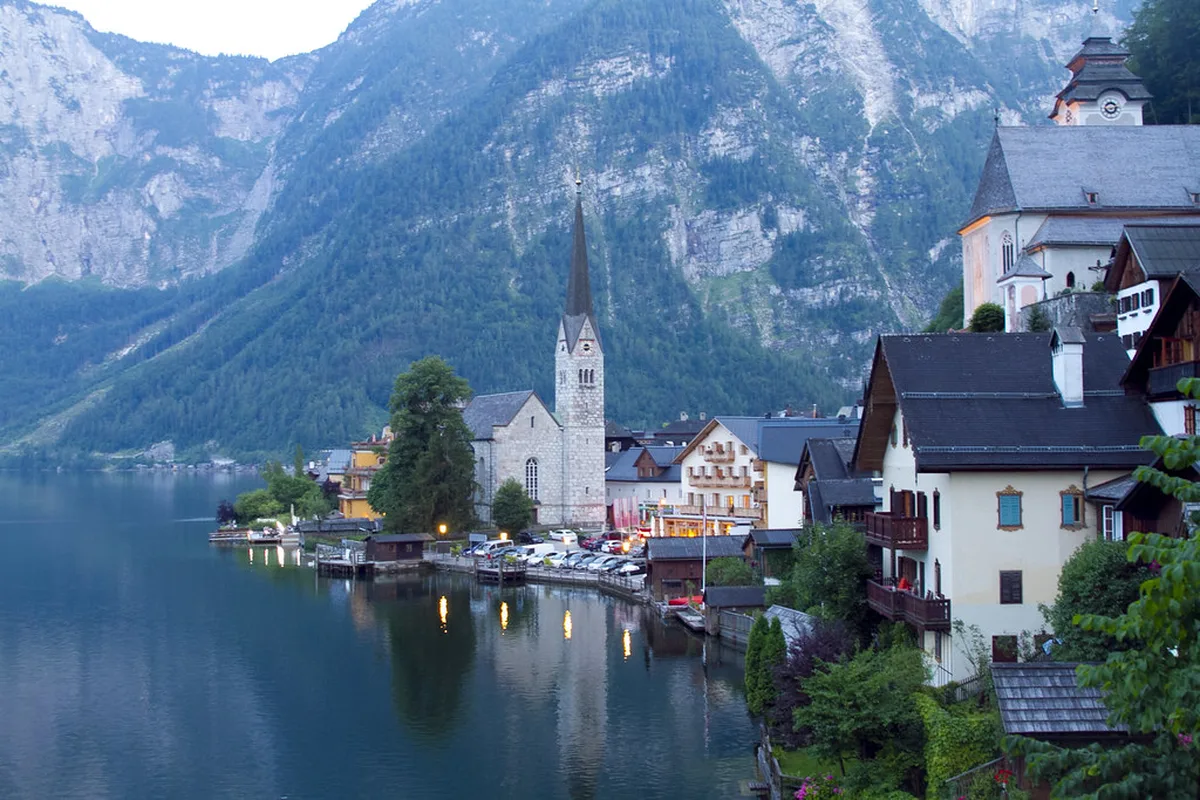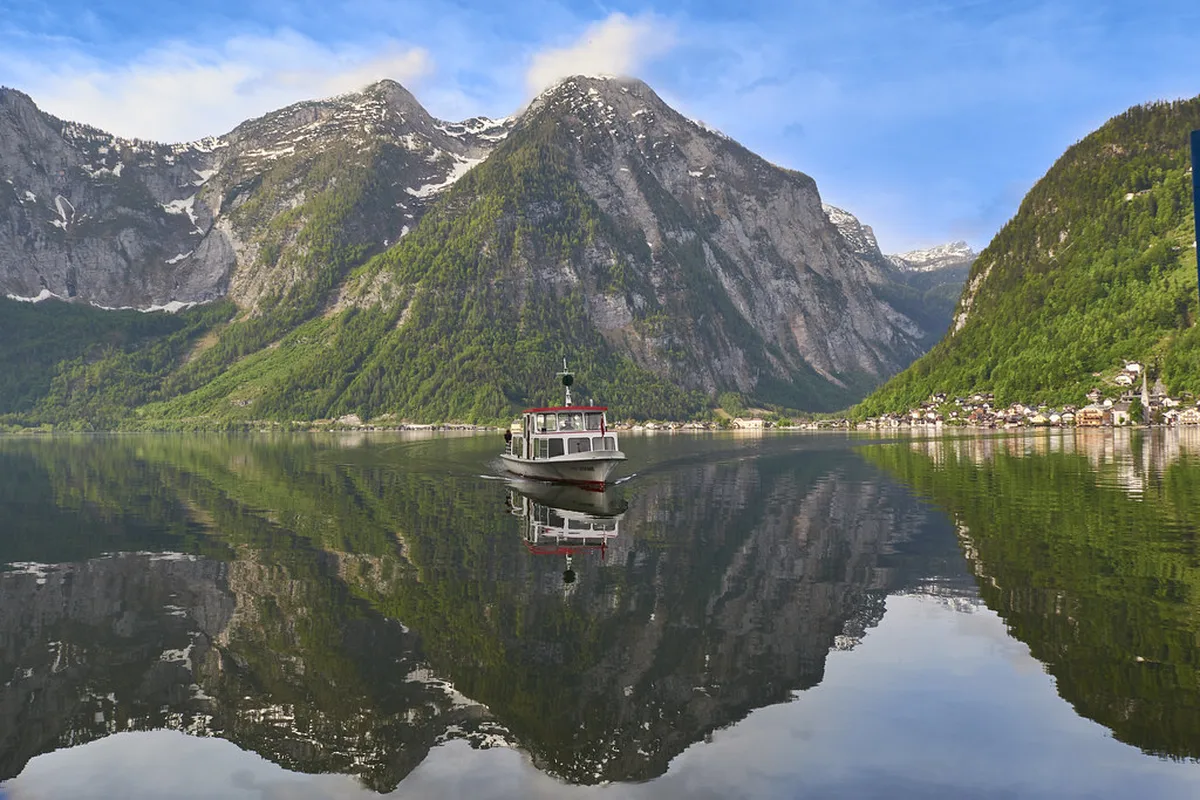
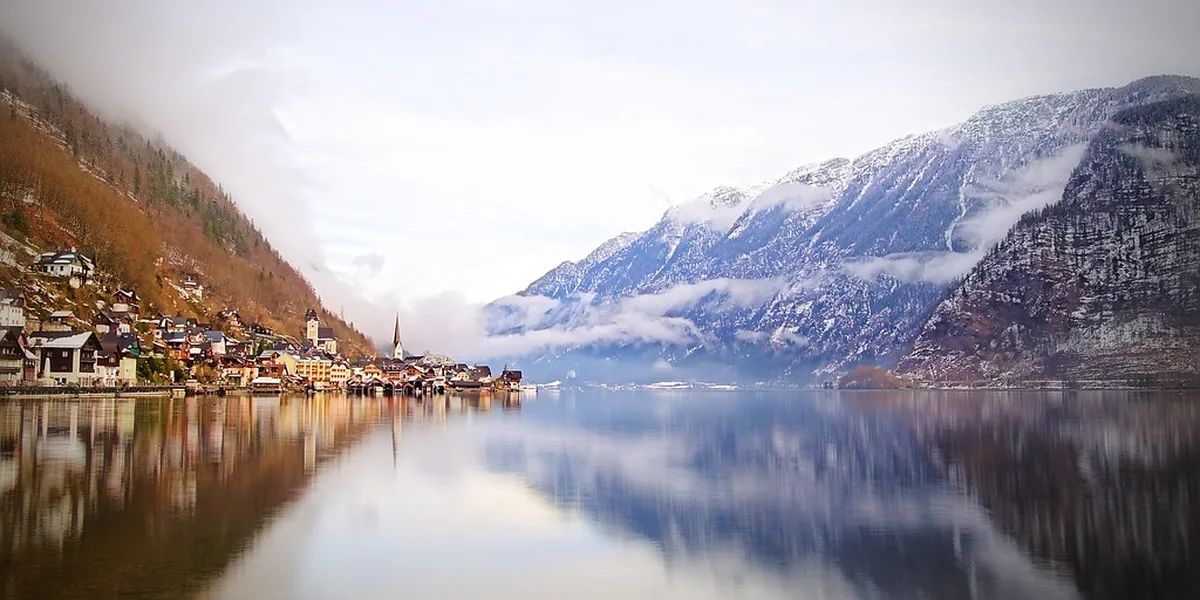
Hallstatt receives over 1 million visitors per year in a village built for fewer than 1,000 permanent residents. The question of when to visit is therefore not simply about weather — it is primarily about crowd management, and secondly about what kind of experience you want. The village looks strikingly different in each season, and each has genuine advantages that summer, despite its popularity, does not always offer.
For a complete overview, see our Hallstatt Austria travel guide.
The Crowds Problem: Why Timing Matters So Much
In July and August, Hallstatt receives upwards of 10,000 visitors per day. On the busiest weekend days, the figure is higher. The village centre — the market square, the famous dock, and the promenade — becomes genuinely congested between 10am and 5pm. The narrow lanes fill with people. The dock viewpoint, where the famous photograph of the church reflection is taken, can be surrounded by dozens of photographers at any given moment in peak season.
The local government has considered limiting daily visitor numbers — a measure that has been discussed but not yet implemented as of 2026. The village's 800 residents live with the consequences of overtourism year-round, but most severely in summer. Choosing to visit outside the peak season is both the most practical strategy for a better personal experience and the more considerate approach for the people who live there.
December: The Winter Secret
December is one of the best months to visit Hallstatt, and one of the least expected. The Christmas market — the Hallstatt Advent market — is held on the Marktplatz in late November and the first week or two of December, typically running until around 20 December. The market is small — perhaps 20–30 stalls — but its setting is extraordinary: snow on the mountain peaks framing the village, the lit church facade reflected in the dark lake, mulled wine and regional food stalls surrounding a space that has hosted a market since medieval times.
Outside the market weeks, December (and January, February) is very quiet. Snow often arrives on the Salzberg and the surrounding mountains by mid-December, and occasional heavy snowfall covers the village rooftops in white. Photographs taken in this conditions are arguably more dramatic than the summer postcard — the dark grey lake, the white mountains, the coloured facades of the village, and the silence that comes when day-trippers are absent.
Average temperatures in December are 1–4°C in the village. The funicular operates with reduced hours. The salt mine tours run with limited schedule. Some cafes and restaurants close for the off-season, though the core establishments remain open.
January and February: The Most Peaceful Months
January and February are the quietest months in Hallstatt, and some of its most visually dramatic. Temperatures fall to around -3 to 2°C. In the coldest winters, the Hallstätter See partially freezes at its edges. Snow covers the village reliably in most years. The funicular and Skywalk operate on reduced schedules and may close on particularly icy days.
For photographers, winter Hallstatt offers a scene that summer images cannot match: the frozen or near-frozen lake reflecting the snow-dusted village at dawn, with no crowd, no noise, and the kind of atmospheric quality that makes the resulting images look almost fabricated. The Dachstein area above Obertraun has a small ski area operational in these months, and snowshoeing on the Krippenstein plateau is one of the region's finest winter activities.
The practical downside of a January or February visit is limited opening hours for attractions and restaurants, and the possibility of road closures or difficult driving conditions after heavy snowfall. Carrying snow chains if driving is advisable in January and February.
March: Transition and Quiet
🎯 Insider Tip: Discover the best Hallstatt experiences with Viator Tours!
March sees Hallstatt begin to emerge from deep winter quiet. Snow persists on the surrounding mountains through most of March, though the village itself may be snow-free by mid-month. Tourist numbers remain low. Some businesses that closed for winter reopen in late March. The lake is cold and dark, the mountains still snow-capped, and the village maintains the peaceful character of winter without the harshest cold.
March temperatures range from approximately 3–10°C. It is a reasonable month to visit for those seeking solitude at a lower price, particularly late March when the days lengthen noticeably and the mountain snowpack begins to recede.
April and May: The Underrated Sweet Spot
April and May are arguably the best compromise months in the entire calendar. Tourist numbers are moderate — higher than winter but a fraction of summer peak. The weather is improving rapidly, with April temperatures ranging from 7–15°C and May from 12–20°C. Wildflowers appear on the mountain meadows in May, and the Hallstätter See takes on a vivid blue-green colour as water clarity is at its annual best.
The surrounding landscape is at maximum greenness by late May, with fresh foliage on the deciduous trees and the contrast between the new green and the lingering snow on the highest peaks producing the colour palette that represents alpine spring at its most intense. May is also when the Salzkammergut is most accessible for hiking — trails are clear at lower elevations, though snow may persist on routes above 1,500 metres.
Visiting in the first two weeks of May means Easter holiday visitors have largely departed but the main summer season has not begun. Accommodation in and around Hallstatt is available without the months-in-advance booking required for July and August.
June: The Last Quiet Month Before Peak
Early June continues the pleasant conditions of May with increasing sunshine and warming temperatures (15–22°C). The summer atmosphere begins to arrive by mid-June in Austrian school holiday terms. Visitor numbers rise noticeably in the second half of June but remain well below July and August levels. The mountain trails are mostly clear of snow. The lake is warm enough by late June for swimming in sheltered bays.
June is the last month in which booking accommodation in Hallstatt village with reasonable lead time (a few weeks) is usually possible for weekend stays. From July onward, the most sought-after guesthouses require multi-month advance booking.
July and August: Peak Season Reality
🎯 Insider Tip: Discover the best Hallstatt experiences with Viator Tours!
July and August deliver the weather and the light that the famous Hallstatt photographs depict — warm days (average high 23–25°C), long hours of sunshine, and the brilliant blue of the lake under a clear sky. They also deliver 10,000+ visitors per day. If you visit in these months, the experience depends almost entirely on your willingness to manage timing carefully.
The strategy that works: arrive on a weekday rather than weekend. Take the first morning ferry from Hallstatt Bahnhof at around 6:30–7am if staying on the opposite shore. Be at the dock viewpoint before 8am. Visit the Skywalk and salt mine from 9am. Leave or retreat to accommodation by noon, returning in late afternoon from 5pm onward when day-tripper coaches depart. This sequence allows the iconic experience while avoiding the worst of the crowd density.
Accommodation in the village in July and August must be booked 6 months in advance for any reasonable selection. Prices are at their annual high. If cost and flexibility matter, staying in Bad Ischl and visiting as a day-tripper from there is the practical choice — with the irony that you become the day-tripper.
September and October: Autumn and Colour
September is excellent — warm enough for comfortable outdoor activity (average high 18–22°C in September, 12–16°C in October), with visitor numbers dropping sharply after Austrian and German school summer holidays end in early September. The larch forests on the Salzberg and in the surrounding valleys turn gold and orange through October, framing the lake views with autumn colour that many photographers find superior to summer green.
October is the peak month for this autumn colour, typically reaching maximum intensity in the second and third weeks. Cool mornings produce reliable mist on the lake surface, and the combination of autumn foliage, mountain mist, and the village's reflected church spire in the still water produces consistently atmospheric photography. Visitor numbers in October are a fraction of August.
By late October, temperatures drop toward single figures (5–12°C) and the higher hiking routes close as snow returns to the mountains above 1,200 metres. The village retains its open, accessible character through the end of October before settling into the pre-winter quiet of November.
November: The Quietest Month
November is the quietest month in Hallstatt and the least photogenic in terms of the classic views — grey skies, bare deciduous trees, and the lake under low cloud. Some guesthouses and restaurants close for maintenance or owner holidays in November. It is not a month to specifically seek out unless you need absolute solitude or are arriving directly before the December Christmas market season.
Summary: When to Visit Hallstatt
- For the most peaceful experience: January, February, or early March. Snow likely, very few visitors, limited opening hours.
- For the best balance of weather and crowds: Late April, May, or September. Comfortable temperatures, moderate visitors, full access to all attractions.
- For autumn photography: October, specifically weeks 2–3. Peak foliage colour, mist on the lake, low crowds.
- For the Christmas market: Late November to mid-December. The most atmospheric seasonal event in the Salzkammergut.
- For the iconic summer postcard: July or August, but only with early-morning arrival, weekday scheduling, and realistic expectations about crowds.
Specific Crowd Avoidance Tips for Summer
If summer is the only time you can visit Hallstatt, these tactics improve the experience considerably:
- Arrive at the dock view before 8am. After 9am, the area becomes progressively more crowded.
- Visit on a Tuesday, Wednesday, or Thursday. Weekend crowds are significantly denser than weekday crowds.
- Book the earliest available salt mine tour time. The 9am or 9:30am tour means you are underground during the hottest, most crowded part of the day.
- Leave the village between 11am and 3pm. Return from 5pm when tour coaches begin to depart.
- Stay overnight if possible. The period from 7pm onward, when day-trippers have left, is the most peaceful and atmospheric version of Hallstatt.